
Attribution: separate the touch from the business result
David A · Founder, 1212 Agency
Published November 16, 2026

Explain attribution through recorded interactions, platform rules and verified business stages. Keep pipeline, contract value and collected revenue distinct.
Three systems can report different totals without any of them describing the same thing. An ad platform may credit an interaction, analytics may record an event and a CRM may show a later sales stage. The first task is to identify the definition behind each number.
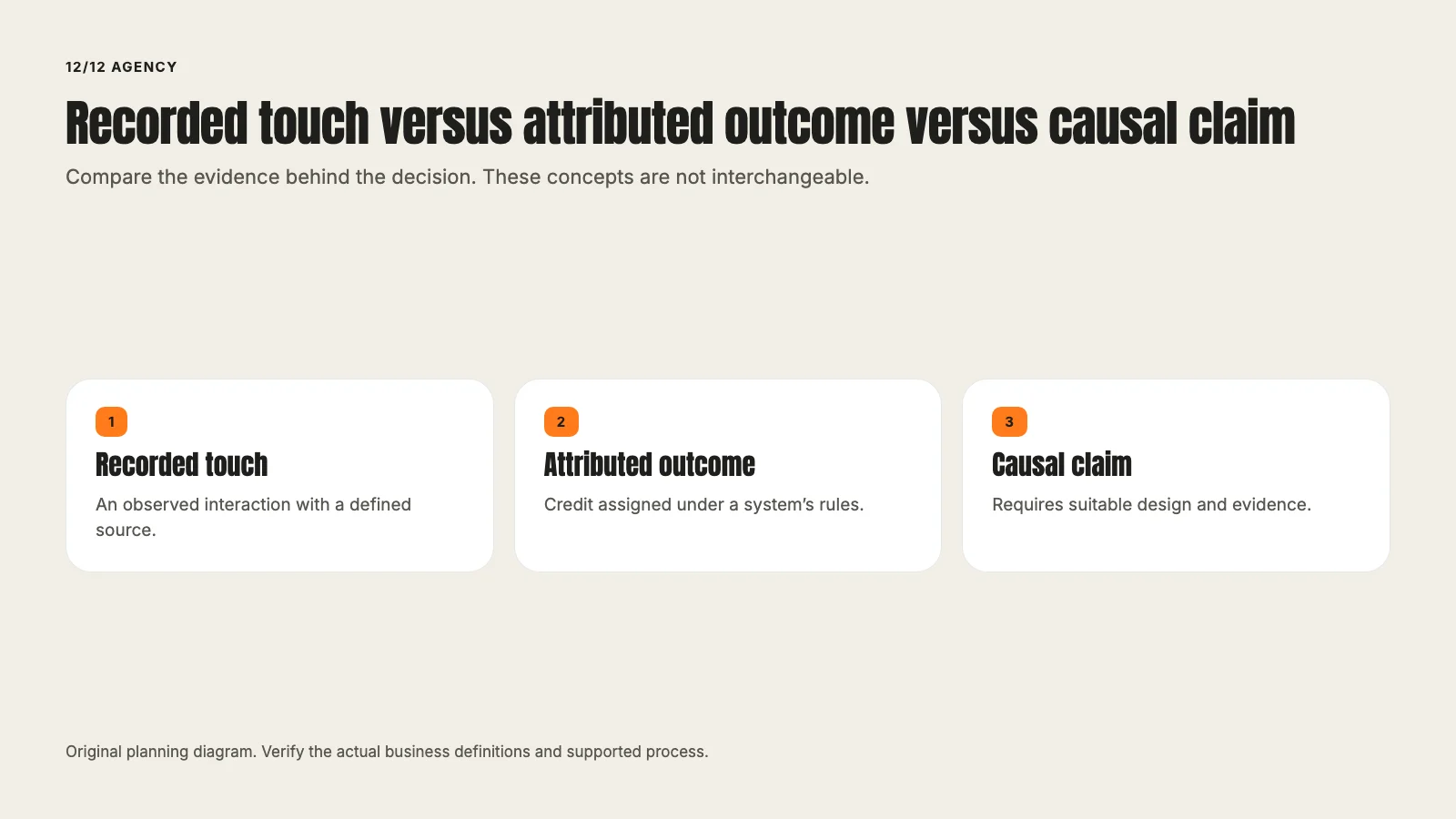
Marketing attribution assigns credit under a model. It is not the same as proving that the advertising caused the business result. A useful report keeps those questions separate and explains the evidence available for the next decision.
Name the recorded touch
A campaign parameter, ad click, page visit or email interaction can be evidence of a touchpoint. Its meaning depends on the source and collection method. A source field is not automatically a complete history of every influence on the buyer.
Record where the data comes from, when it was captured and what can overwrite it. A current CRM source value may not describe the original entry if the system updates the field later. Missing information should remain visible rather than being filled with a confident guess.
The conversion-tracking guide explains the general collection and handoff contract. Attribution analysis should begin with that evidence, not assume that every record arrived intact.
Define the accepted action and later outcome
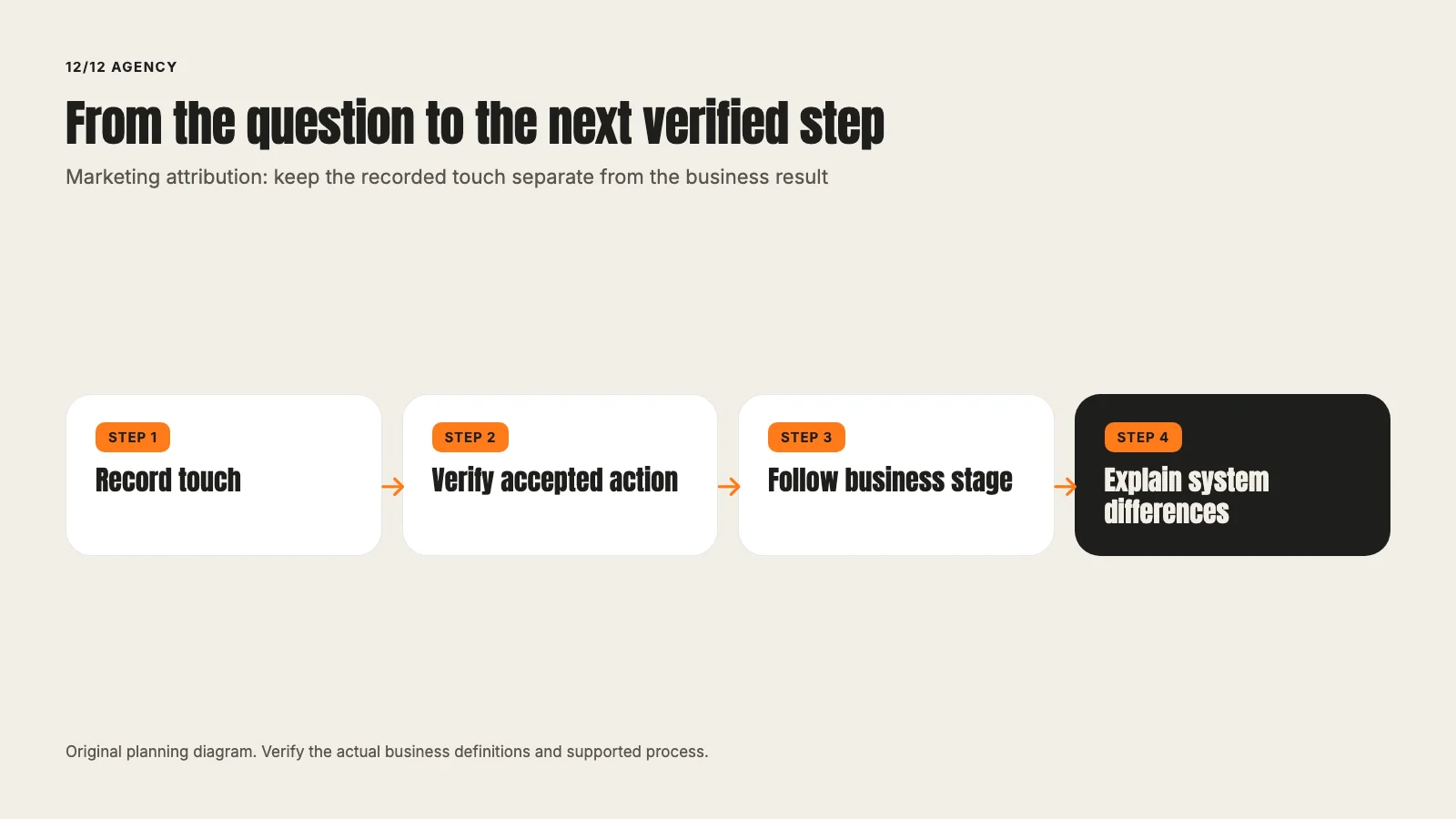
A form accepted, appointment booked, meeting held, opportunity qualified and customer won are separate stages. One buyer can appear at several stages without becoming several customers.
The B2B lead-generation guide and SaaS lead-generation guide can support those definitions. Use the business's actual evidence and timestamps rather than applying a final status retroactively to every date.
A deal amount may be estimated pipeline, proposed contract value or a verified closed amount. Collected cash is another measure. The report should name which one is present and should not relabel it revenue merely because the CRM exposes a value field.
Read the model that assigns credit
Google's attribution-model documentation explains that the selected model affects how credit is assigned to conversion actions. The actual account and action settings matter; do not assume every campaign or system uses the same rule.
Google Analytics has its own attribution overview. A platform's modeled allocation is a specific analytical view, not permission to treat every reported amount as a unique business outcome.
Record the model, eligible interactions, window, reporting date basis and action definition for the comparison. If the setting changes, preserve the change date and explain the effect on comparability.
Build a simple fictional timeline
A fictional buyer discovers a software guide, later clicks an ad, submits a request and eventually signs a contract. The guide may have helped explain the product. The ad platform may credit the request under its rules. The CRM may record the source and a later sales outcome.
Those observations do not establish what would have happened without the guide or ad. The business can describe the recorded journey and the model's credit while keeping the causal question open.
A useful timeline lists the event, timestamp, source system, identifier and evidence. It does not need to expose the person's name or private details in a public report. A fictional example should be labeled as an illustration in both prose and diagrams.
Explain why totals differ
Differences can arise from stage definitions, time zones, date ranges, attribution windows, identity matching, consent behavior, processing delays and duplicate handling. Investigate the actual configuration rather than declaring a tracking failure from one mismatch.
A platform might report by interaction time while a CRM report uses the stage-change date. A request may arrive near midnight in one timezone. A later import may not yet be processed. These are questions to verify, not excuses to assume every discrepancy is harmless.
The Google Ads audit guide supplies the account-review context. If an action or goal changed, the report should identify that before comparing cost per result with an earlier period.
Keep technical receipt separate from paid credit
A tag can send a technical request during a test without an eligible paid interaction for the platform to credit. A synthetic identifier can test the business's own mapping but cannot stand in for a real ad click.
Verify the source record, accepted event, relevant technical receipt and attributed eligible result as separate claims. If only the first three were checked, report that narrower result. Do not replay an outcome or create another booking merely to make a platform count appear.
Use labeled QA identities and exclude them from business performance. If a test automatically creates a deal value, it remains QA rather than commercial pipeline. Preserve the record and obtain approval for any later change or deletion.
Compare a matched business cohort
Choose an entry group and follow it through an appropriate outcome window. Record accepted requests, bookings, attendance, qualification, won outcomes and missing evidence. Keep the cost boundary and period consistent.
Do not compare this month's media cost with unrelated deals closed this month when their acquisition happened earlier. A cohort view and a cash-period view can both be useful, but they answer different questions.
For a fictional cohort with $5,000 of included cost and five verified customers, simple acquisition cost is $1,000 per customer. If two platforms each credit some of the same customers, their reported values must not be added into a larger unique customer total.
Distinguish attribution from incremental effect
Attribution asks how a system assigns credit among observed interactions. Incrementality asks what changed because a marketing activity occurred. A stronger causal claim needs a suitable design, comparison and evidence.
A low attributed cost or high reported ROAS does not settle that question. Returning visitors may already have strong intent. Season, pricing, product changes and other channels can affect a before-and-after comparison.
A descriptive report is still useful when it is honest. It can show where source information is missing, which stage definitions conflict and which journey deserves the next investigation. It should not manufacture certainty to make the dashboard look complete.
Turn the report into a decision
For each material finding, record the observation, evidence, interpretation limit and proposed next action. A source-persistence repair is different from a change to attribution settings or an experiment designed to estimate lift.
The paid media overview, Google Ads service and LinkedIn service can connect the analysis to a scoped engagement. Actual model, budget, data and campaign changes still require approval.
Avoid promising perfect agreement between systems. The useful result is an explanation the business can assess and a defined next verification job.
Use a three-column reconciliation note
For one material discrepancy, show the platform claim, the business-system claim and the evidence needed to compare them. For example, an attributed request count, a CRM booking count and a collected-cash total should not be expected to match by default.
Name the stage, period, timezone and identifier contract for each. Then investigate one difference at a time. If the source is missing, identify the capture step. If the event is accepted but not credited, review eligibility and processing. If the CRM stage lacks evidence, ask the responsible team to verify it.
The note should end with a specific next job and the limit on the current conclusion. It can explain a discrepancy without declaring either system universally wrong or inventing a complete customer journey from incomplete records.
Bring the three system definitions and one cohort to a measurement review.
Frequently asked questions
Want this run for your business?
Tell us where to send it and we'll follow up with the strategies that fit your market.