
Build a SaaS content program the buying team can use
David A · Founder, 1212 Agency
Published November 16, 2026

Plan SaaS content from expert evidence to useful buyer resources. Connect writing, distribution, sales use and refresh without multiplying duplicate articles.
A SaaS content program needs more than a list of search terms. It needs a reliable way to turn product knowledge into explanations buyers can trust, then put those explanations where they are useful.
The work spans research, expert review, writing, design, distribution and maintenance. If those responsibilities are missing, the calendar can fill with articles that are easy to produce and difficult to use. This guide shows how to build a program around a fictional workforce-scheduling product without pretending the example is a client case study.
Separate the reader's question from the format
A buyer might need to understand a workflow, compare alternatives, verify an integration or prepare an internal business case. An article is one possible answer. A product page, short demonstration, diagram or implementation checklist may be better.
Create a question map before assigning formats. Record the reader, decision, existing answer and evidence needed. If three keyword variations describe the same job, start with one useful page. If an integration question requires current product documentation, involve product before promising an article.
The fictional company's buyer asks how shift changes reach managers. That is different from a broad explanation of scheduling software. A practical workflow demonstration could answer it, while the category page retains the general product story.
Establish a source routine
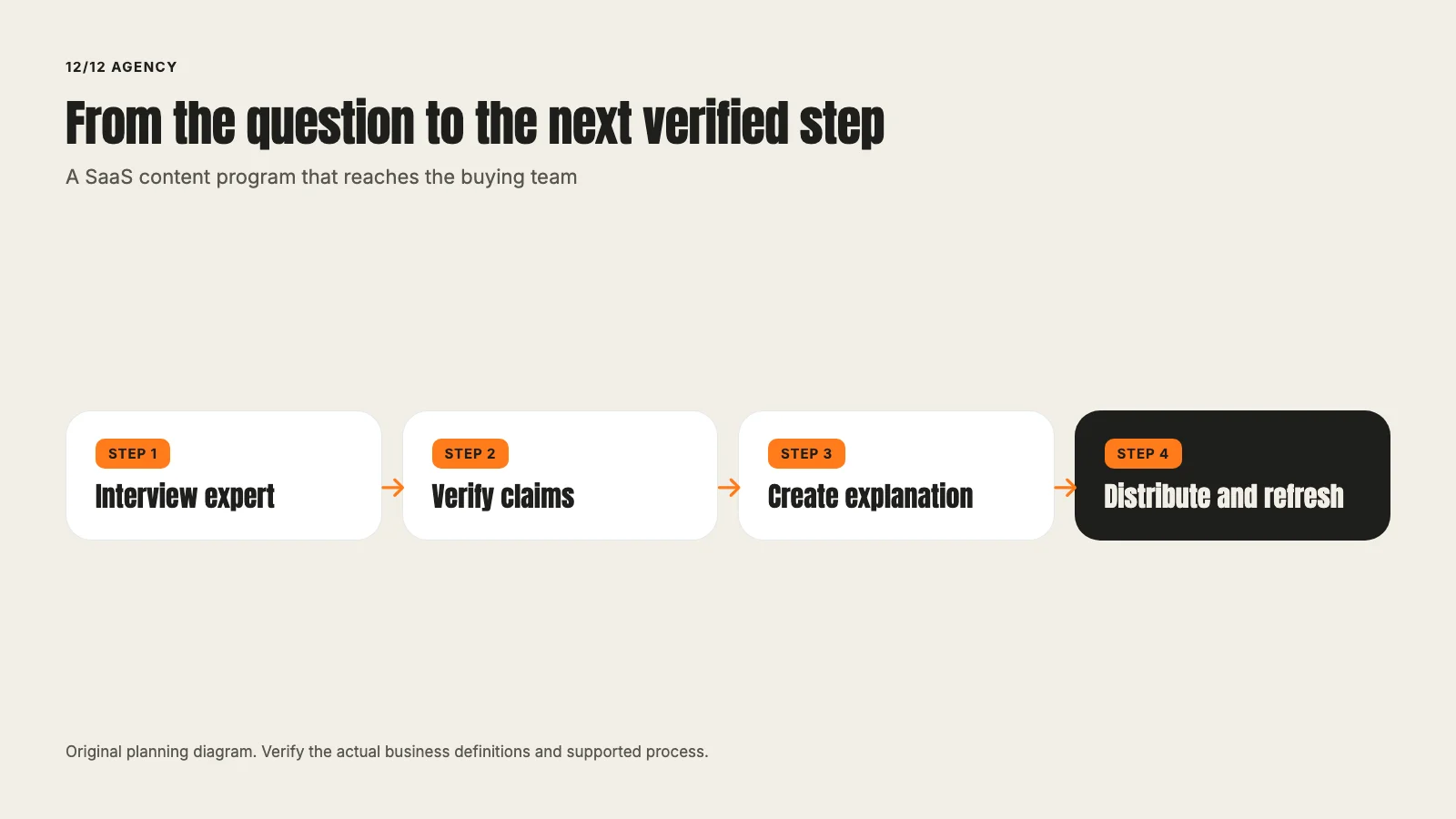
Interview the people who know the product and its customers. Ask for the actual workflow, exceptions, common misunderstandings and limitations. A useful interview question is what the reader could get wrong after reading the draft.
Distinguish public evidence from internal material. A support conversation can reveal a topic without becoming a public quotation. Customer screenshots, names and results need permission. Product claims require a reviewer who can verify the current capability.
Keep a simple source record: statement, evidence, reviewer and change trigger. A claim that an integration supports two-way updates should be checked precisely. If it only imports one field in one direction, broader wording would create a false expectation.
Give each piece an editorial job
A good brief defines the reader's starting point and the decision the piece helps them make. It also states what belongs elsewhere. A content-distribution guide should not repeat an entire SEO architecture guide; it can link to the relevant explanation.
For the scheduling example, a workflow article might cover who requests a change, who approves it, what information is visible and what happens when the request cannot be fulfilled. It can use an original, clearly labeled illustration. It does not need an invented percentage improvement to be useful.
Ask the writer to explain the process rather than merely list benefits. Replace vague claims such as seamless automation with the actual action and its limits. The expert reviewer then checks the explanation, not just the company name.
Design the useful part
A diagram can make roles, timing and handoffs easier to understand. A checklist can help the reader prepare the right information. A comparison table can make criteria explicit. Choose the visual because it improves the answer.
Avoid screenshots that expose private customer data or imply a capability the current product does not support. A fictional wireframe should be labeled as such. If the article needs a real current interface, capture and verify it before publication.
The fictional shift-change guide could include a three-role diagram and a sample approval checklist. That gives sales and support a concrete resource without reproducing the same article in every channel.
Plan distribution before publication
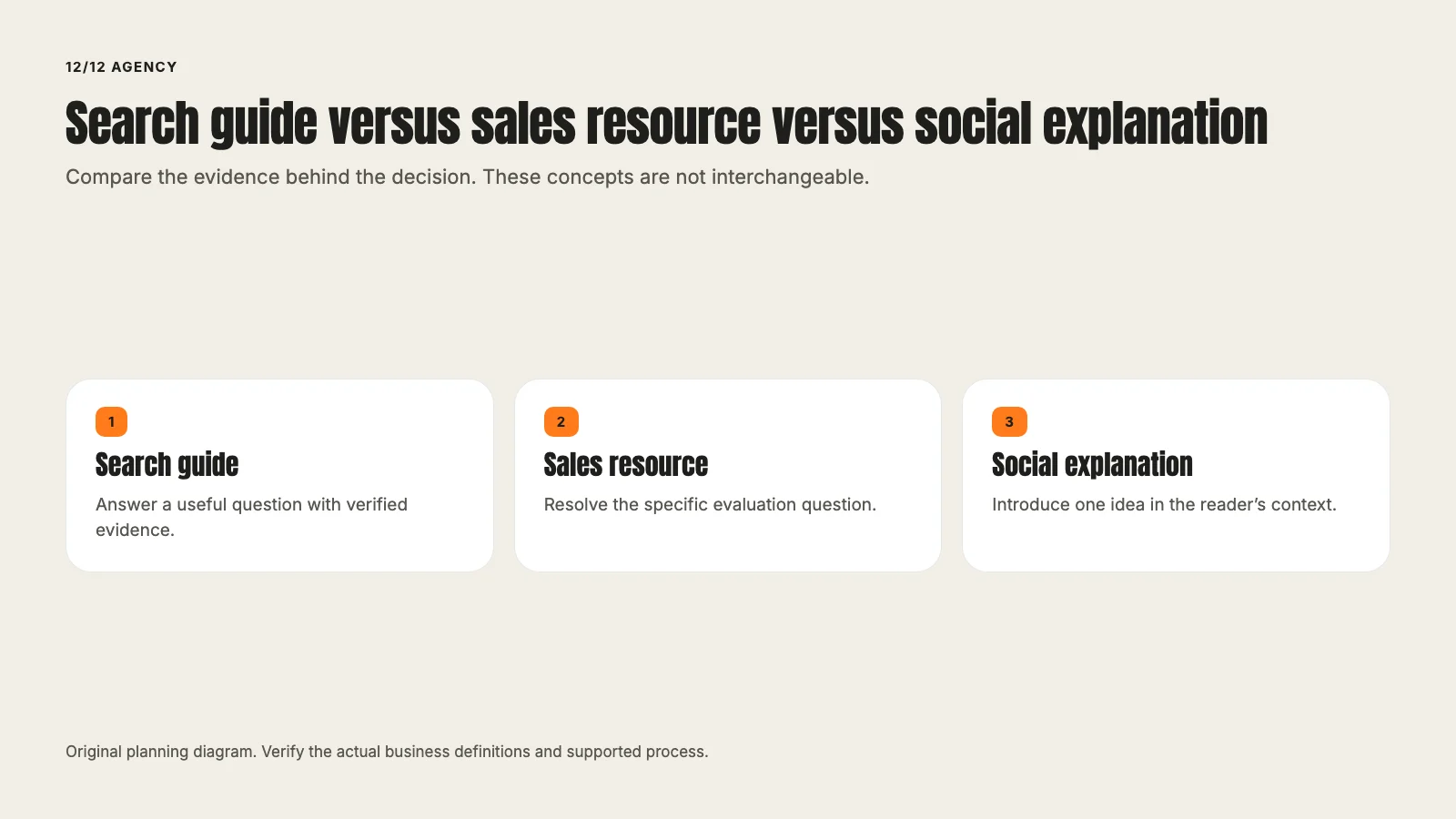
Identify where the intended reader will encounter the piece. Search may reach someone actively investigating the workflow. A salesperson may share it after a relevant conversation. A short social explanation may introduce the problem and invite a useful question. A permission-based email may help an existing subscriber evaluate the next step.
Adapt the explanation to each context. A social post can demonstrate one decision rather than compress every section into an unreadable graphic. A sales follow-up should use the resource only when it answers the person's question. Publishing does not authorize unsolicited outreach or automatic email enrollment.
Existing SaaS demand-generation content can retain the partner-launch and distribution context it already covers. A new content-program guide should add a distinct production and maintenance system.
Make sales use observable
Ask the team which resources help a conversation and which remain unused. Record the question that prompted the share and whether the resource clarified it. This qualitative evidence can improve future briefs.
Where measurement is available, distinguish page visits, accepted requests and later business outcomes. A content-assisted opportunity is not proof that one article caused the sale. Attribution and causality are different questions.
The fictional company might find that the shift-change resource is useful during evaluation but rarely creates the first inquiry. That does not make it a failure if its intended job was to resolve a recurring evaluation question.
Refresh by evidence, not by date alone
Assign a review trigger. A product release, changed integration, revised plan boundary or repeated buyer misunderstanding can require an update. A page that remains accurate may need no rewrite merely because a month has passed.
Review overlap as the library grows. If two pieces answer the same question, improve or consolidate the stronger answer with a deliberate link and redirect plan where necessary. Do not silently remove a useful page or change live routes without approval.
The content map should show current pages, planned work, source responsibility and the next review. It is a working decision record, not an obligation to publish every idea collected.
A practical first production cycle
Choose one question repeatedly raised by suitable buyers. Verify its product evidence, write a complete answer, create the one visual that makes it easier to understand, and review it with the expert. Plan the search, sales and social contexts where it can help. Then publish only after the final checks and approval.
Review what the piece taught the team before expanding the program. Did the expert identify a product limitation? Did sales need a shorter explanation? Did readers ask a different question? Those findings should shape the next piece.
Bring the buyer question and the product expert to a content planning conversation.
Make the source interview produce a usable record
For the fictional shift-change article, ask the expert to demonstrate one ordinary request and one exception. Record who acts, what information changes and where the process ends. Then ask the writer to explain the same sequence back without relying on internal shorthand.
The SaaS service page can preserve the commercial context. A B2B lead-generation resource can explain the later inquiry, while the tracking guide keeps the recorded touch separate from the business result. The paid media overview belongs only where paid distribution is actually part of the plan.
Use Google's helpful-content questions as an editorial check, and its technical eligibility guidance when reviewing the public delivery. Useful writing and accessible delivery are related responsibilities; neither certifies a future ranking.
The interview record should identify one unresolved claim, the person who can resolve it and the exact wording that depends on it. That lets writing continue around verified material. It also prevents a generic expert review label from hiding whether the real gap is a feature, a diagram or permission to use a customer example.
Frequently asked questions
Want this run for your business?
Tell us where to send it and we'll follow up with the strategies that fit your market.