
Google Ads lead quality: define what sales can accept
David A · Founder, 1212 Agency
Published November 16, 2026

Diagnose lead quality through source, offer, eligibility, contact and later sales evidence. Separate spam, fit problems and a broken handoff before changing ads.
Bad leads is a description of frustration, not a diagnosis. It can mean spam, unsupported work, the wrong geography, incorrect contact information, unclear permission, an unanswered request or a prospect who has not yet reached the right stage.
Those problems need different responses. Start by defining what sales can accept, then follow the evidence from source to business outcome. This guide does not assume that every low-quality symptom is a targeting failure or that a longer form is always the answer.
Agree on the accepted and qualified stages
An accepted request means the system recorded the intended action. A sales-qualified inquiry means the agreed fit evidence exists. A booked meeting, held meeting and won customer are later stages.
Write the definition with sales, operations and the people maintaining the records. If the team cannot reliably verify a criterion, do not build a report that assumes it. Keep unknown as a visible state rather than guessing.
Google's lead-generation guidance provides a primary platform context for meaningful outcomes. The business still has to define what those outcomes mean in its own process.
Review the promise the buyer saw
Open the actual ad and destination. Does the offer describe supported work? Does it imply a feature, availability or price the business cannot fulfill? A campaign can attract unsuitable people because the message invites them.
The Google Ads service page can support a scoped account review. The SaaS service context or home-services context should inform the actual buyer promise.
Do not fix an inaccurate offer by adding more qualification questions alone. The page should state meaningful boundaries before the person submits information. A clear limitation can save the buyer and sales team unnecessary work.
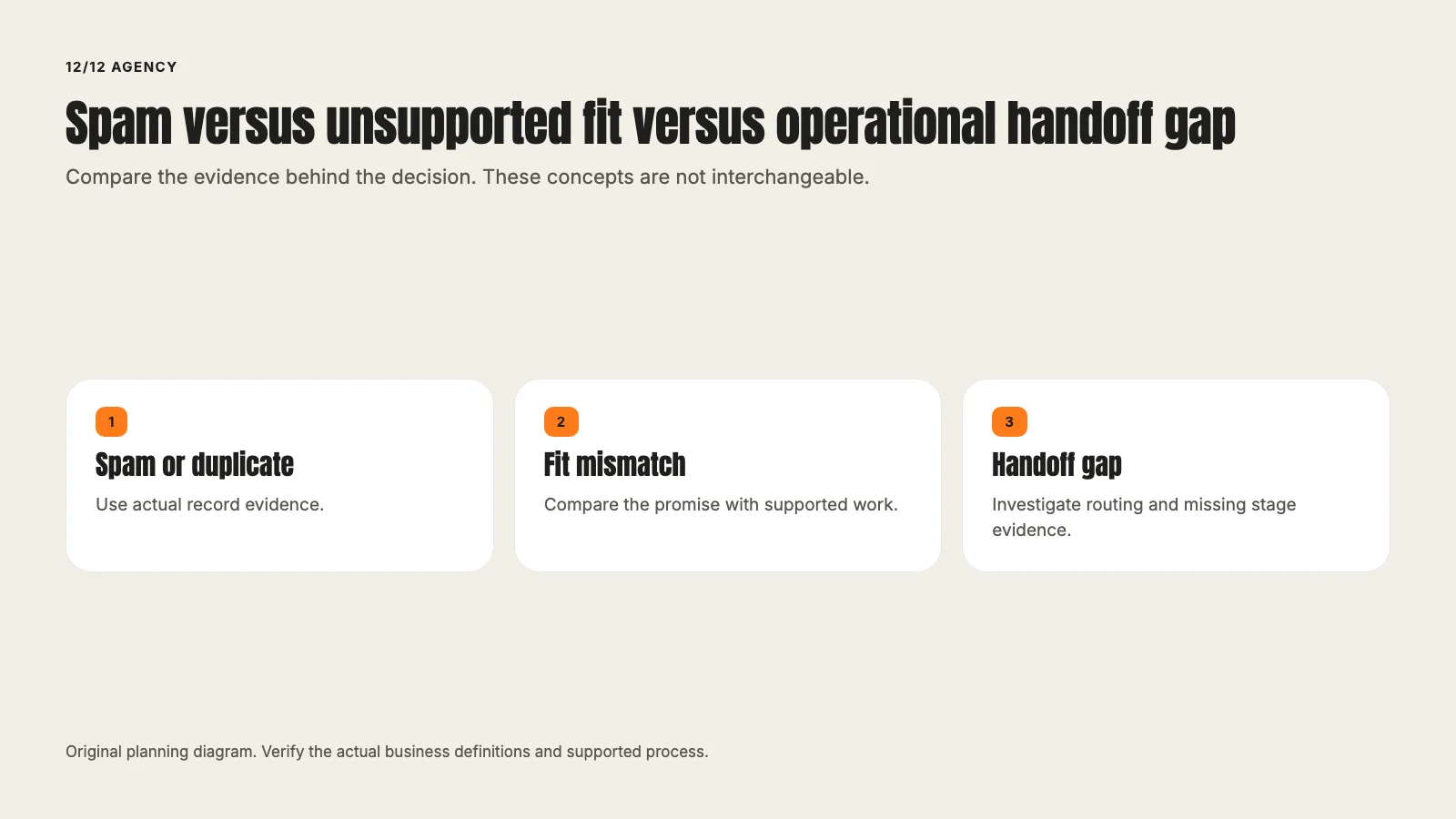
Classify the symptom with evidence
Use distinct reasons such as automated spam, duplicate, outside area, unsupported service, incorrect contact details, missing permission evidence, unable to reach and insufficient information. The list should fit the business and be short enough that the team uses it consistently.
Do not label a request spam merely because the person did not answer the first call. Do not label it unqualified because the CRM lacks an updated stage. Review the record and contact process before making that conclusion.
A small sample of actual approved records can reveal a pattern, but protect private information. A public report can show aggregated categories and definitions without customer names, phone numbers or personal situations.
Inspect the intake and routing
Ask which fields the team actually uses. A relevant project type or company context may improve routing. An unnecessary field can reduce completion without improving fit.
Check the accepted request, notification, responsible role and fallback. If the system drops a key field or sends the inquiry to the wrong team, the campaign's audience may not be the main problem. A reproducible defect needs a repair and acceptance check.
The conversion-tracking guide explains the difference between the page event, technical receipt and business record. A contact created automatically does not prove that someone reviewed the request or that a meeting occurred.
Check the goal the campaign is actually using
Review action definitions, counting and selected campaign goals. A campaign can optimize toward an early action while the report informally calls it a qualified lead. The label should not outrun the evidence.
The Google Ads audit guide retains the detailed configuration review. Keep that work separate from the lead-quality interpretation so that a change in measurement is not mistaken for a change in the market.
If later outcomes can be connected, Google's enhanced-conversions-for-leads guidance is a current primary reference. The actual method depends on supported systems, identifiers, permissions and approved data handling. A CRM integration page is not proof that the business's connection works.
Read queries and placements in context
Available search-term evidence can reveal unsupported demand or a mismatch between the query and destination. Use the existing negative-keyword guide for the exclusion process. Avoid broad blocks based on one ambiguous query.
Other campaign types may need different evidence. Do not assume the same search-report fields are available everywhere or that a platform's audience label guarantees buyer fit. Review current controls and the actual offer before proposing a setting change.
A channel diagnosis should state what is observed and what remains uncertain. The paid media overview can connect that analysis to the larger campaign and page plan.
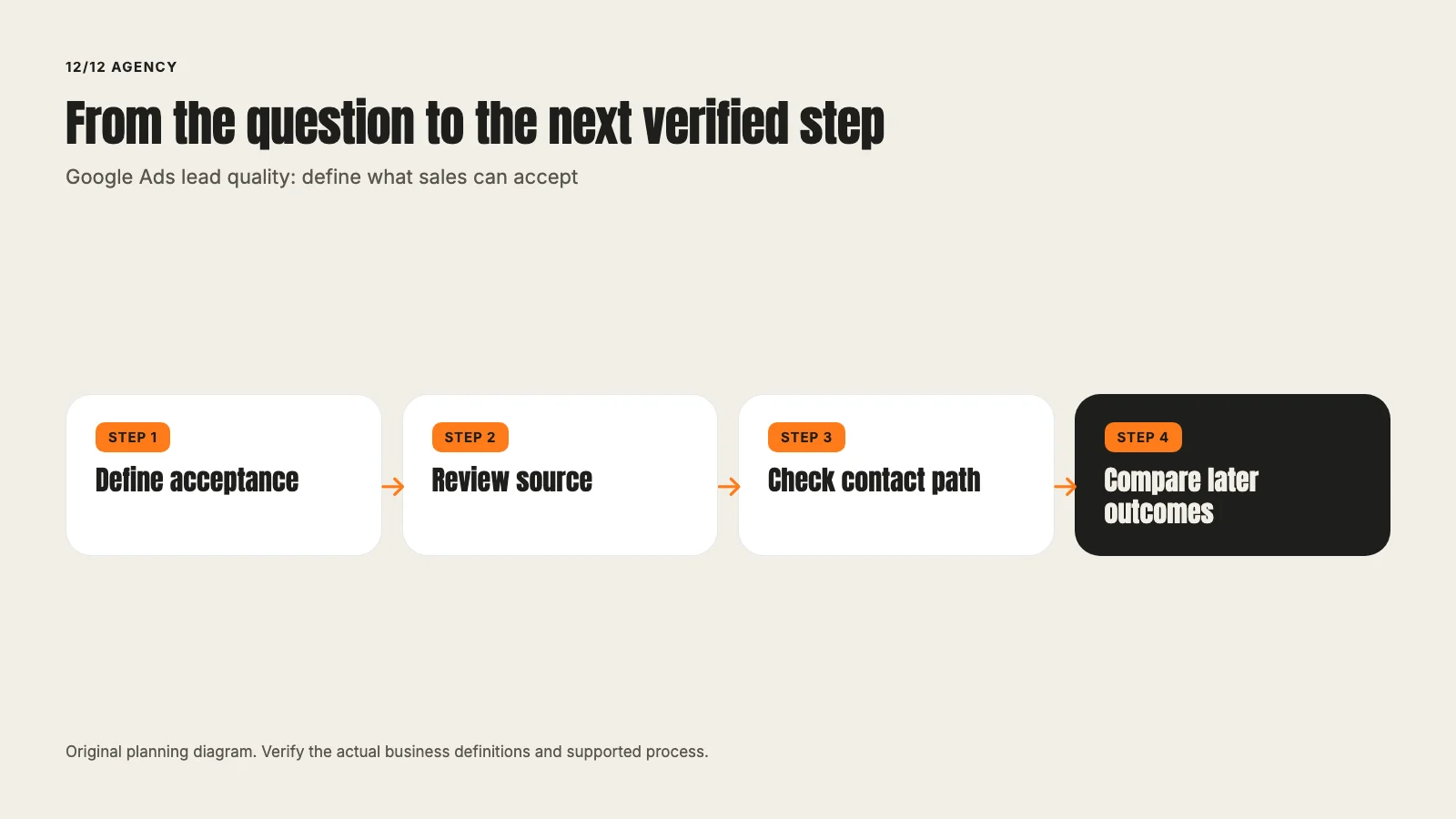
Work through a fictional quality review
Suppose a fictional software campaign records 50 accepted requests. The team later identifies ten duplicates, five unsupported use cases, five records with missing evidence and 30 potentially suitable requests. Those categories should not be collapsed into 20 bad leads.
For the suitable group, the next review might show which people were contacted, which meetings were booked and which outcomes remain open. A missing contact attempt suggests an operating issue. A repeated unsupported-use question suggests a message or product-boundary issue.
These numbers are invented to explain the classification. They are not client results, a normal spam rate or a promise that a change will recover a fixed share of leads.
Compare costs through the completed stage
Include the relevant media and other acquisition costs under a clear boundary. Use the same cohort and outcome window. Do not compare this month's forms with unrelated deals closed this month.
If the fictional included cost is $5,000, cost per accepted request is $100. If 20 later meet the agreed qualification definition, included cost per qualified inquiry is $250. The calculation requires those 20 verified outcomes; it cannot be inferred from the initial form count.
A better qualification rate can accompany lower total demand, and a higher request rate can accompany worse fit. Review both the counts and the definitions rather than selecting the percentage that looks most favorable.
Plan one change that addresses the observed cause
A page clarification, routing repair, approved exclusion, spam control or later-stage measurement connection are different work items. Name the observation, proposed change and evidence that will test it.
If several changes are necessary, describe them as a combined intervention. Do not claim that one headline caused every later improvement. Sparse or non-randomized comparisons should remain descriptive.
Budget, bid, targeting, status and data-connection changes need the responsible approval. A lead-quality review should not quietly expand account authority or create new customer contact without permission.
Give sales a classification it can maintain
Use a brief set of categories with examples and an honest unknown state. Ask the team to distinguish unsupported need, duplicate, missing contact evidence and potentially suitable request. The definitions should be visible where the record is updated.
Do not require a salesperson to infer the ad platform's attribution while handling an inquiry. Sales supplies the business-stage evidence; the marketer investigates the campaign, page and source contract. The roles can collaborate without asking either to invent missing information.
Review a small approved sample together when definitions drift. If two people classify the same request differently, resolve the rule before reporting a precise qualification rate. The result may be a better operating definition rather than a campaign change, and that is a concrete improvement to the quality of the acquisition analysis.
Bring the acceptance definition and a completed cohort to a review. Replace a broad complaint with the next verifiable job.
Frequently asked questions
Want this run for your business?
Tell us where to send it and we'll follow up with the strategies that fit your market.