
Google Ads for pool builders: qualify the project
David A · Founder, 1212 Agency
Published November 16, 2026

Connect pool-builder searches to the right project page and estimate process. Review new builds, renovations, service coverage and inquiry quality together.
Someone researching a new pool, a renovation and weekly pool cleaning may use overlapping words, but those are different jobs. A builder's search campaign should explain the projects it accepts before the estimate team spends time resolving that mismatch.
The useful planning unit is the supported project. This guide follows a fictional pool builder from search to estimate and shows the decisions that matter. It does not reuse historical pipeline as revenue or promise a particular acquisition cost.
Establish the project boundaries
Ask the team which new-build and renovation work it performs, which properties and areas it serves, and which services it does not offer. A builder may not provide cleaning, retail parts or every type of repair. Those boundaries should inform the campaign and page.
Record capacity too. A business may accept inquiries while quoting a longer construction timeline, but that timeline must be explained accurately. Avoid using immediate availability language merely because it seems likely to increase submissions.
Financing, permitting, safety and engineering claims require the relevant professional review. Marketing copy should not imply that completing a form establishes a project's feasibility or approval.
Group searches by the decision they represent
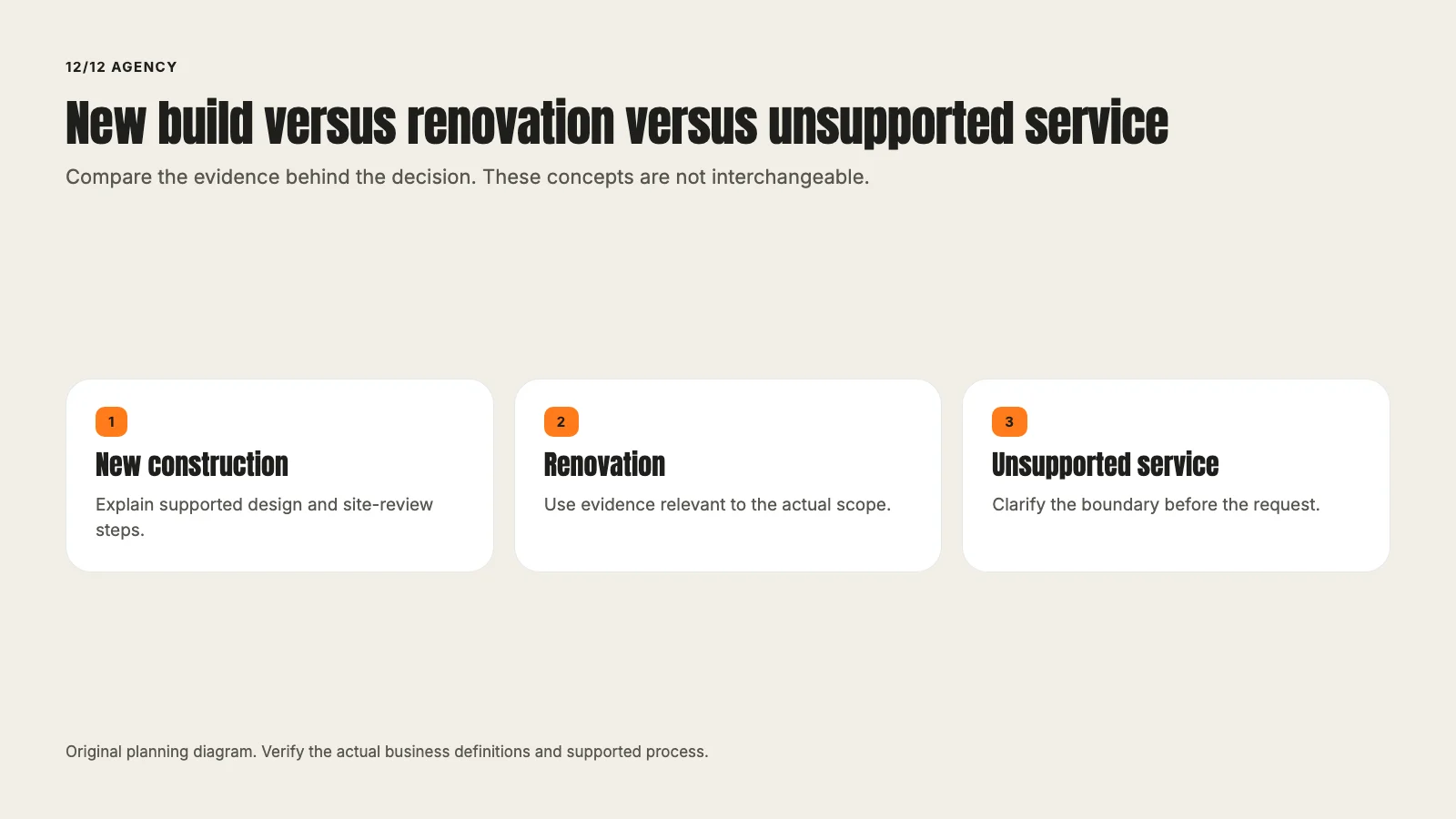
A new-build query may need design process and project-fit information. A renovation query may need examples of the supported scope. A service query may be unsuitable for the builder or may belong with a separate operating team.
Read current search results and available account search terms. Classify the actual intent before proposing exclusions. A broad word such as remodel may describe suitable work in one business and unsupported work in another.
Campaign structure should preserve the controls needed for different destinations and economics. It is not a goal to maximize the number of ad groups. Our existing negative-keyword guide retains the detailed exclusion process.
Build a destination that helps the estimate conversation
The page should state the supported project, area and next step. Show accurate, approved project evidence with enough context to avoid implying that every design or finish is offered everywhere.
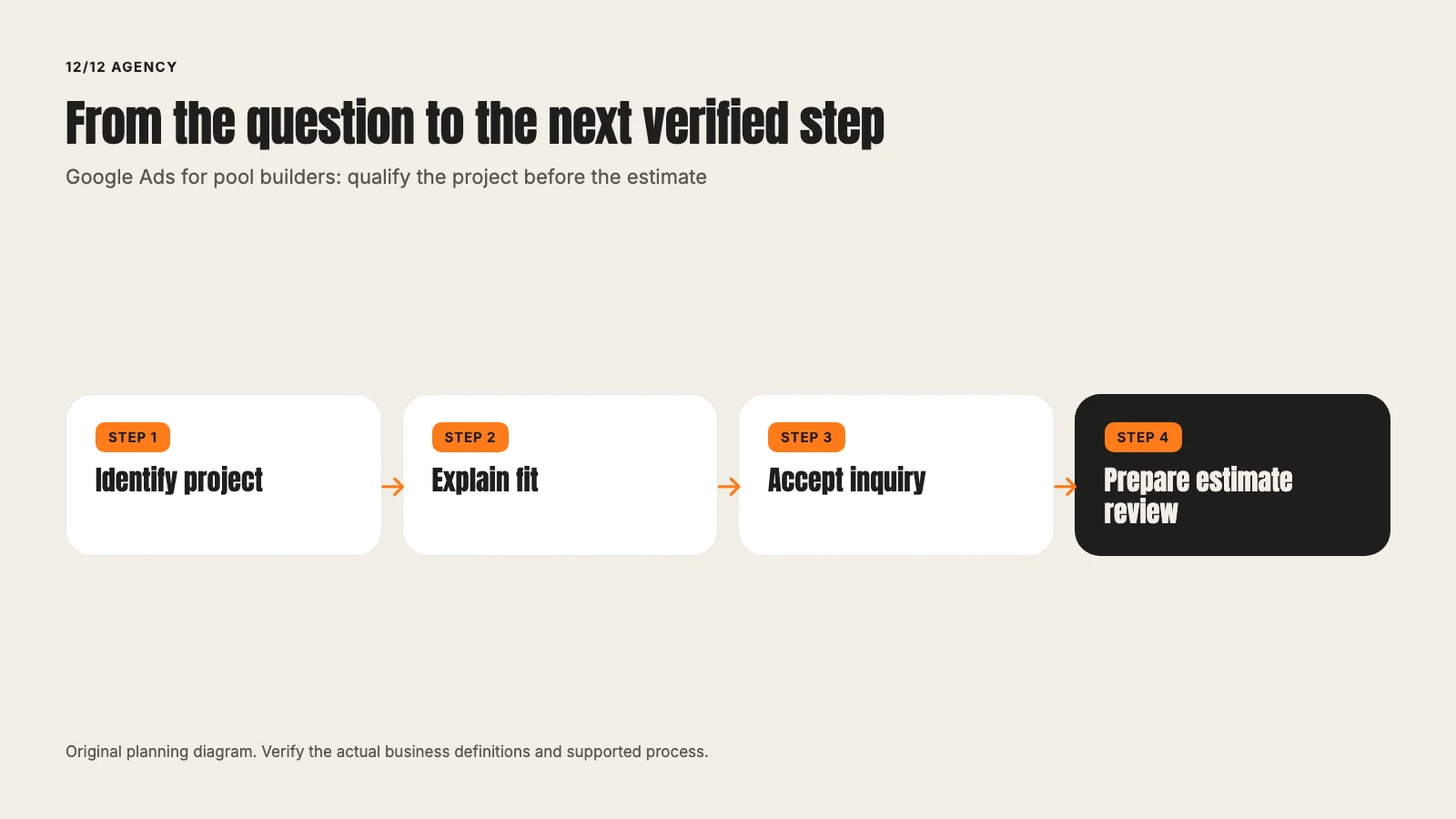
A fictional new-build page might explain design consultation, site review and estimate preparation. Its form could ask the project category and general location if those fields are actually used. It should explain whether the office will call to confirm fit or whether an appointment is truly booked.
The existing pool-builder service page remains the commercial destination. The existing pool SEO article retains organic search guidance, so this article does not repeat its full page architecture.
Keep qualification practical
Ask the sales team what information changes routing or preparation. A project type, service area and approximate planning stage may be useful. A field nobody reads is not qualification.
Use accurate scope language rather than an invented minimum budget. If the business has a real threshold or limitation, confirm the current wording before publishing it. Do not require detailed plans or confidential documents at the first marketing step unless a reviewed process supports that collection.
Check mobile completion, error messages and the accepted request. A long form can look professional while failing to send the information the estimator needs.
Verify the source and the handoff
Campaign information should survive the actual page-to-form or page-to-calendar route where the approved setup supports it. Inspect the real path, including intermediate links. Preserving a parameter in the first address bar does not prove it reaches the CRM.
Use a bounded, approved labeled test when a real request is necessary. Verify the accepted action, technical event and business record separately. Keep tests out of reported project and revenue totals.
A contact, booked estimate, issued proposal and won job are separate stages. A proposal's value is not collected revenue. Our tracking guide explains the broader distinction between technical receipt and business evidence.
Model the next decision with honest costs
Use the company's own costs and observed rates, or label assumptions clearly. For example, a fictional $4,000 media plan at an assumed $8 click cost models 500 clicks. A 4% accepted-request rate models 20 requests. If 25% become booked estimates, the model gives five estimates and $800 media cost per booked estimate.
That is arithmetic, not a pool-industry benchmark or a forecast. It excludes fees and other costs unless entered. It also says nothing about which estimates will become projects.
Review actual cohorts after the relevant sales window. Compare supported project mix, geography, season and capacity before declaring a channel better or worse.
Make one accountable next change
The evidence may justify a clearer project page, a routing repair, a proposed exclusion or a new test. Record the observation and expected effect. Keep campaign settings, spend changes and launch decisions within the business's approval process.
Review the campaign and estimate path with 1212.
Prepare a project-fit brief before adding variants
For one supported pool project, record the property context, new-build or renovation scope, actual operating area, approved examples and the estimate process. Ask which facts change the receiving team's decision and which details can wait for a later reviewed conversation.
The home-services overview can connect that brief to the broader business. Google's lead-generation guidance provides a primary reference for useful outcome inputs, and its search-term documentation explains the available actual-query evidence. Neither reference establishes the builder's scope, price or construction feasibility.
Use the brief to evaluate proposed page variants. A city name or a minor wording change does not automatically create a new project question. A meaningful renovation workflow may justify a different explanation because its evidence and intake differ from new construction. The page map should make that reason visible.
Review the estimate team's evidence
Ask what happened to a defined inquiry cohort after the first request. Were projects within scope? Did the team receive the correct category and area? Which estimates remain open? Use those answers to distinguish a message issue from a routing or capacity problem.
Keep the cost model aligned with that cohort. A proposal's value may change and a signed project may follow a separate payment schedule. Do not use either figure as collected revenue without the actual financial evidence. A dashboard field named value does not settle the definition.
When a source produces unfamiliar requests, inspect the actual search and page before blocking demand. The buyer may be asking for an unsupported service, but the page may also be unclear about what the builder offers. Those are different repairs.
Finish the review with one specific proposed change and its acceptance check. For example, a supported-project clarification should be checked against business facts and the resulting page. A source-field repair should be checked through one approved labeled request. Avoid repeated real submissions or extra appointments to create a cleaner test report. The marketing system should preserve evidence while respecting the estimate team's time and the business's actual availability.
Keep the portfolio review tied to the offer
For each project image, ask which supported claim it illustrates and whether the accompanying caption is accurate. A new-build photo should not quietly substantiate a renovation service the team did not perform. A finish sample should not imply that every material is available for every property.
If the example cannot be cleared, use a truthful process explanation or a clearly labeled concept diagram. Useful evidence does not require inventing a customer result. The final page should make the estimate conversation easier while preserving the limits that the builder needs to assess with the prospective customer.
Frequently asked questions
Want this run for your business?
Tell us where to send it and we'll follow up with the strategies that fit your market.