
Google Ads for HVAC: separate the job before the bid
David A · Founder, 1212 Agency
Published November 16, 2026

Plan HVAC search campaigns around service calls, replacements and real coverage. Connect the query, landing page and intake before judging cost per lead.
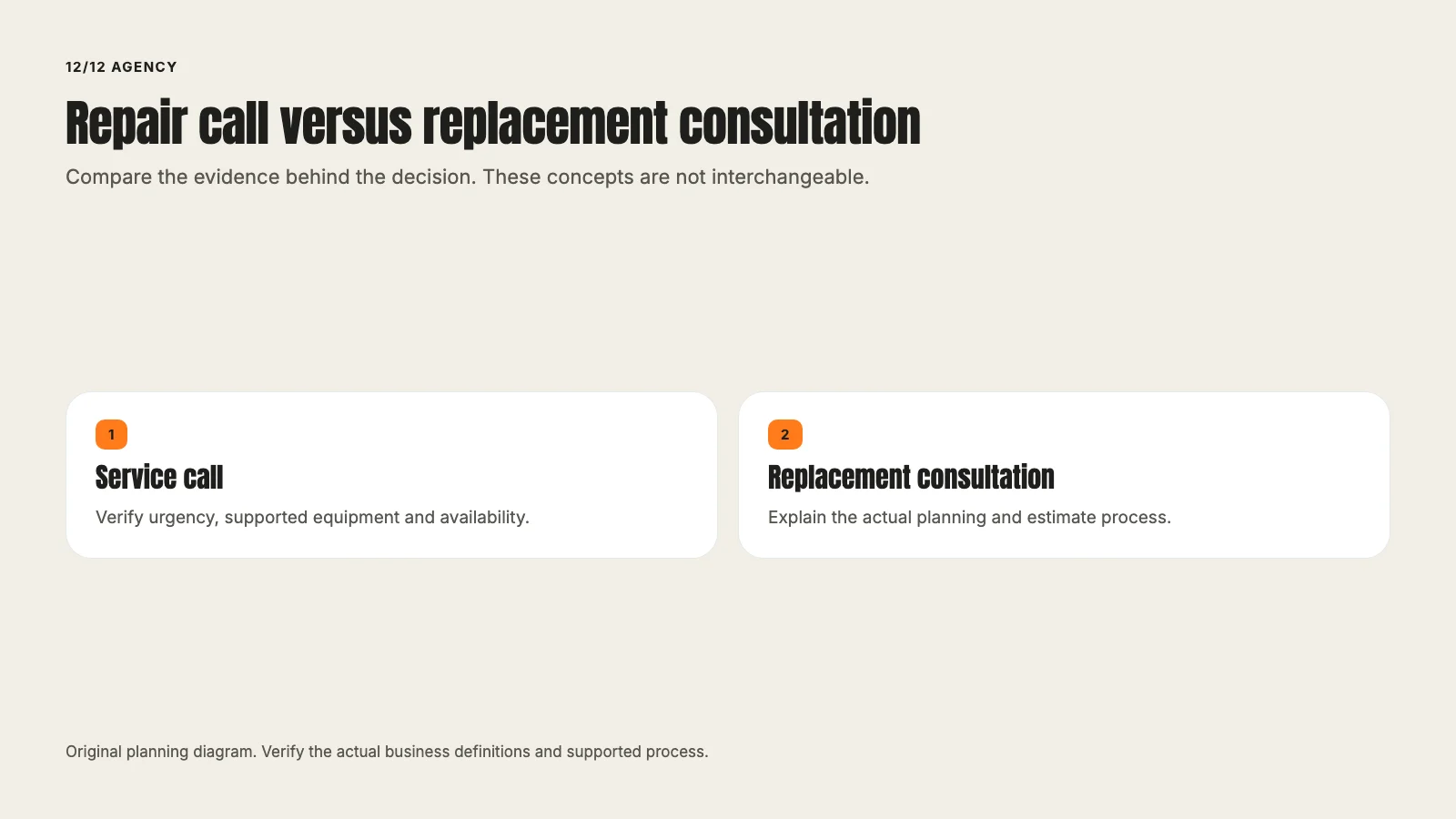
An air-conditioning repair request and a planned system replacement may reach the same HVAC company, but they require different promises and intake decisions. Treating both as generic HVAC traffic can hide which work the campaign is buying.
Start with the jobs the company can actually serve. Then align searches, ads, pages and accepted outcomes. This guide explains that planning process with fictional examples, not an account recommendation or industry cost benchmark.
Separate urgency and project type
Ask the operations team which calls it accepts, which equipment and properties it supports, and when someone is available to respond. An emergency claim must match real coverage and staffing. Do not promise round-the-clock service because the keyword contains emergency.
A practical search map may distinguish repair, replacement and maintenance where those jobs change the offer. Commercial and residential work may also need different explanations. The map should follow the business rather than create every possible keyword combination.
A repair visitor may need to understand availability and the assessment process. A replacement buyer may need an explanation of the consultation, estimate and installation planning. Neither page should diagnose equipment safety or prescribe a system from a web form.
Match the destination to the query
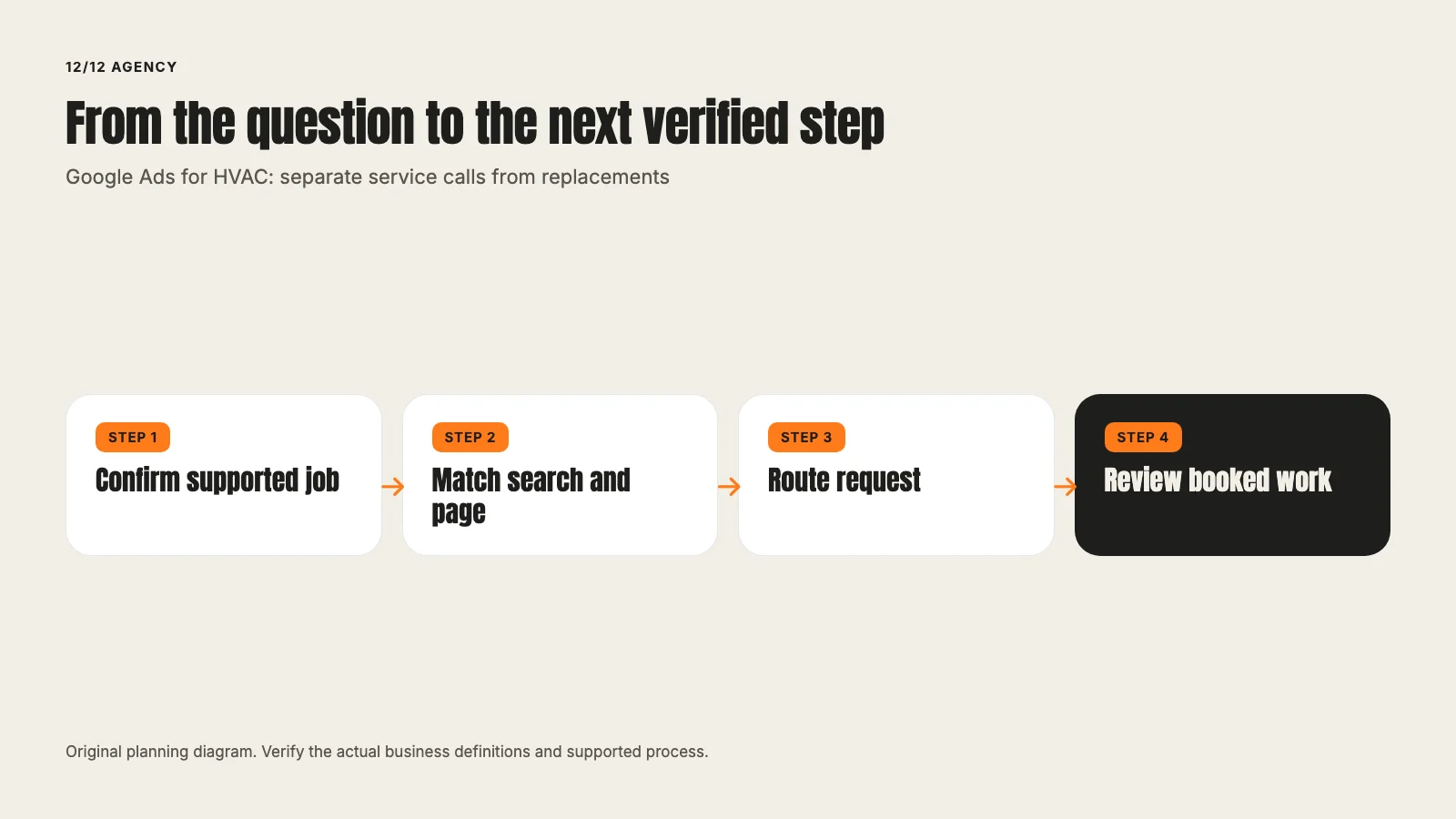
Write down the search family and the promise the ad makes. Open the destination as a new visitor and check whether the page answers that promise without requiring a phone call to discover the basic limits.
The first screen should establish the supported job and next action. Later sections can explain process, areas served, approved credentials and relevant evidence. Keep claims about financing, warranties and rebates current and reviewed. A generic testimonial cannot substantiate every technical or financial statement.
Use the existing HVAC service page for the commercial explanation. The broader HVAC marketing guide retains channel planning, while the search campaign guide focuses on query-to-intake decisions.
Use geography the business can fulfill
A target area is a business commitment, not just a map setting. Confirm actual dispatch coverage, travel constraints and any boundary that changes service availability. Review the account's current location options before a campaign change; an agency should not infer the correct setting from an address alone.
Do not create a separate landing page for each town unless it offers useful, accurate local information. The ad destination can explain service coverage clearly without pretending the business has an office everywhere.
If the office rejects many requests from a particular boundary, investigate both campaign configuration and page wording. The request may have come through a different source, or the tracking may not preserve the campaign information.
Define the action worth measuring
A phone-button click does not prove that a call connected. A submitted request does not prove that a service visit was booked. Decide which action the campaign is meant to acquire and how later business outcomes will be reviewed.
For the fictional HVAC company, the report could separate accepted requests, contacted prospects, appointments booked, visits completed and won replacement projects. Each stage needs a clear definition and source record. Do not add all stages into a customer count.
Review the selected campaign goals and counting behavior with the measurement team. Our existing tracking guide explains the system handoff. A successful technical request is not automatically a paid-attributed conversion.
Read searches as customer questions
Review actual search terms where reporting makes them available. Classify them by job, fit and destination. A query for HVAC training may be irrelevant to a service campaign; a query containing a brand may need context before it is excluded.
Use the existing negative-keyword guide for the exclusion process. Do not turn one ambiguous search into a broad block that removes suitable demand. Keep a decision log with the reason and expected consequence of each proposed change.
The keyword list and the search terms report are different. Google also limits which searches appear in reports. Missing a specific term is not proof that no such search occurred.
Review costs against the completed job mix
Separate media, management and relevant production costs. Review a defined request cohort after enough time for the intended outcome. A low cost per form can hide unsuitable work or unanswered requests.
If a campaign's job mix changes, explain that before comparing its average cost with a prior period. A replacement-focused test and a repair campaign are not interchangeable. Avoid treating one small month's result as a permanent HVAC acquisition cost.
The next change should answer a specific question: improve service clarity, repair the handoff, review search fit or test an accurate alternative. Bid, budget and status changes need the responsible person's approval.
Bring the supported service mix and the current destination to a campaign review.
Use a service-call review card
For one actual campaign, write the job type, verified availability, service boundary, page promise, accepted action and receiving role. A repair-call card should not inherit the replacement campaign's economics without review. A replacement consultation should not be described as an emergency response merely because both belong to HVAC.
The home-services overview can connect the broader journey. Google's lead-generation guidance is a primary reference for meaningful outcome inputs, while its search-term explanation supports the query review. The actual business facts and technical service claims still require the HVAC team's verification.
Record one completed cohort with accepted requests, unsuitable reasons, booked visits and the evidence still missing. If a request arrived after the office's supported hours, preserve that context. Do not promise an improvement percentage from a response change without an appropriate comparison.
Separate seasonality from a campaign conclusion
An HVAC business can experience changes in demand, staffing and supported job mix. A report should identify those operational differences before interpreting a cost change. A larger request volume during a busy period does not prove that one ad edit caused the increase.
Use matched service and area groups where possible. If the comparison is sparse, keep it descriptive and name what the next review will resolve. One booked replacement can materially change a small cohort's average cost.
The next decision might be to improve repair availability wording, clarify the replacement process or verify a missing field in the intake system. Give each proposed action its own reason and acceptance check. A campaign should not be expanded just because the early form cost looks attractive while the booked-work evidence remains incomplete.
The review record also protects the customer promise. If the team changes hours or temporarily stops accepting a project type, the responsible person should review the page and campaign wording. A technically live ad can still be commercially inaccurate. Keeping the operational source current is part of acquisition quality, not an administrative detail to revisit after spending more.
Give the dispatcher a useful feedback field
A short project classification can reveal whether the request matched the advertised job. Use business-approved labels such as repair inquiry, replacement inquiry, unsupported service and evidence missing. Do not ask the dispatcher to make a marketing attribution judgment while handling a customer.
The marketer can then compare those classifications with the campaign promise and destination. If the pattern suggests a mismatch, prepare the exact proposed copy or configuration change for review. The dispatcher supplies operational evidence; the account team supplies the campaign diagnosis.
This division keeps feedback maintainable and avoids turning every request into a long reporting exercise during a busy service period.
Frequently asked questions
Want this run for your business?
Tell us where to send it and we'll follow up with the strategies that fit your market.