
An email nurture sequence needs a useful next action
David A · Founder, 1212 Agency
Published November 16, 2026

Write a permission-based nurture sequence that answers the buyer’s next question. Define entry, message purpose, exits and the evidence behind later outcomes.
A nurture sequence should help an eligible person make progress, not simply keep the business in their inbox. The messages need a relevant question, a truthful answer and a next action the person can actually take.
Start with the request and the journey. Then define who enters, what each message does and when the sequence stops. The complete example below is fictional. It is sample copy for planning, not a live campaign or a claim of deliverability results.
Where lead generation ends and nurture begins
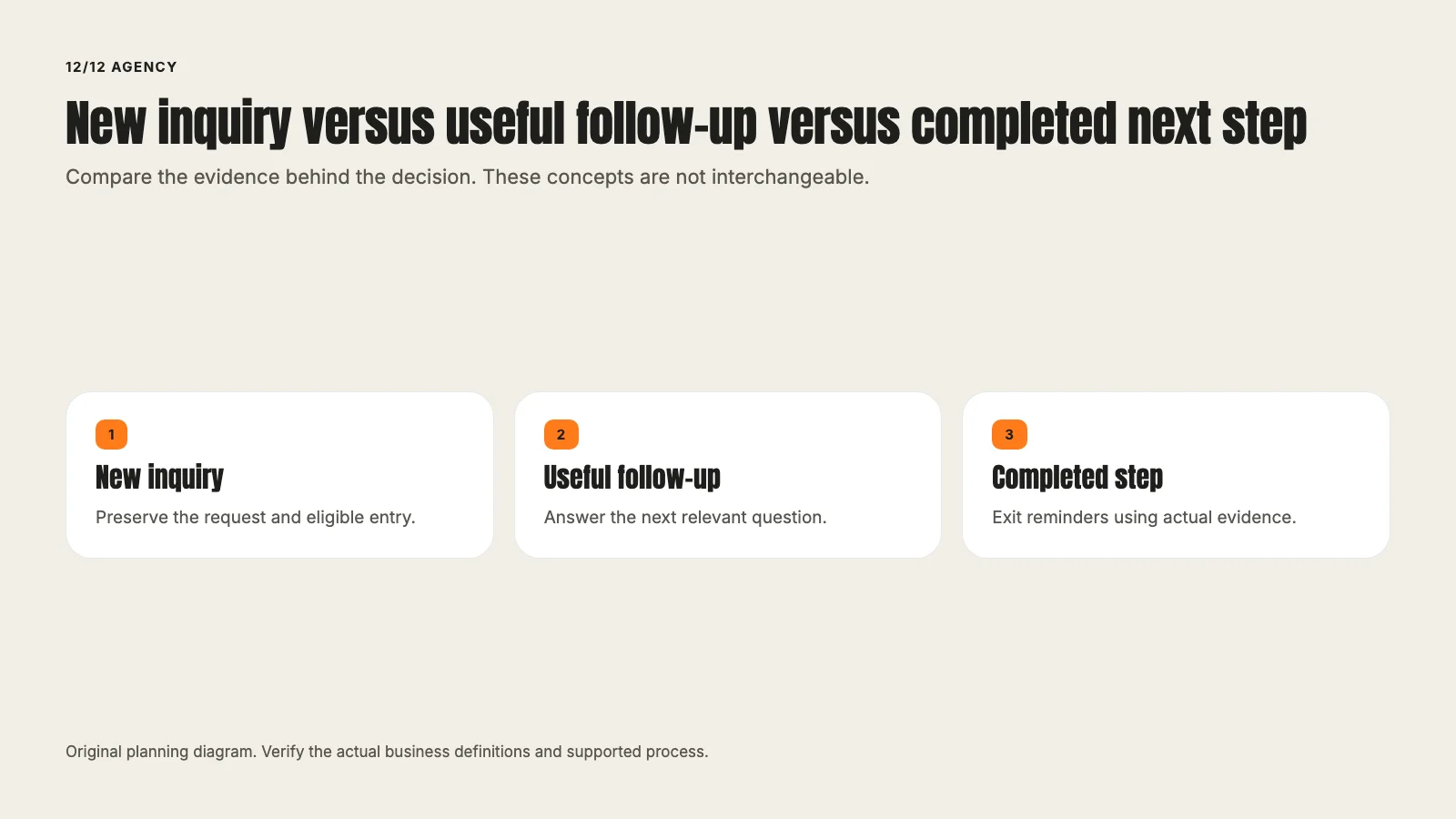
Lead generation creates or captures a potential next conversation. Nurture helps an appropriately eligible prospect work through a later question. A completed resource form does not automatically mean the person requested every sales message the business can send.
The B2B lead-generation guide explains the broader acquisition stages. Keep accepted request, permission, contact, booking and qualification distinct. Nurture does not create qualification merely by sending several messages.
This sequence begins before product signup. Post-signup onboarding has a different job: helping the user complete useful product steps. Keep those journeys separate rather than sending the same reminders to prospects, trial users and customers.
Define entry and exit before writing
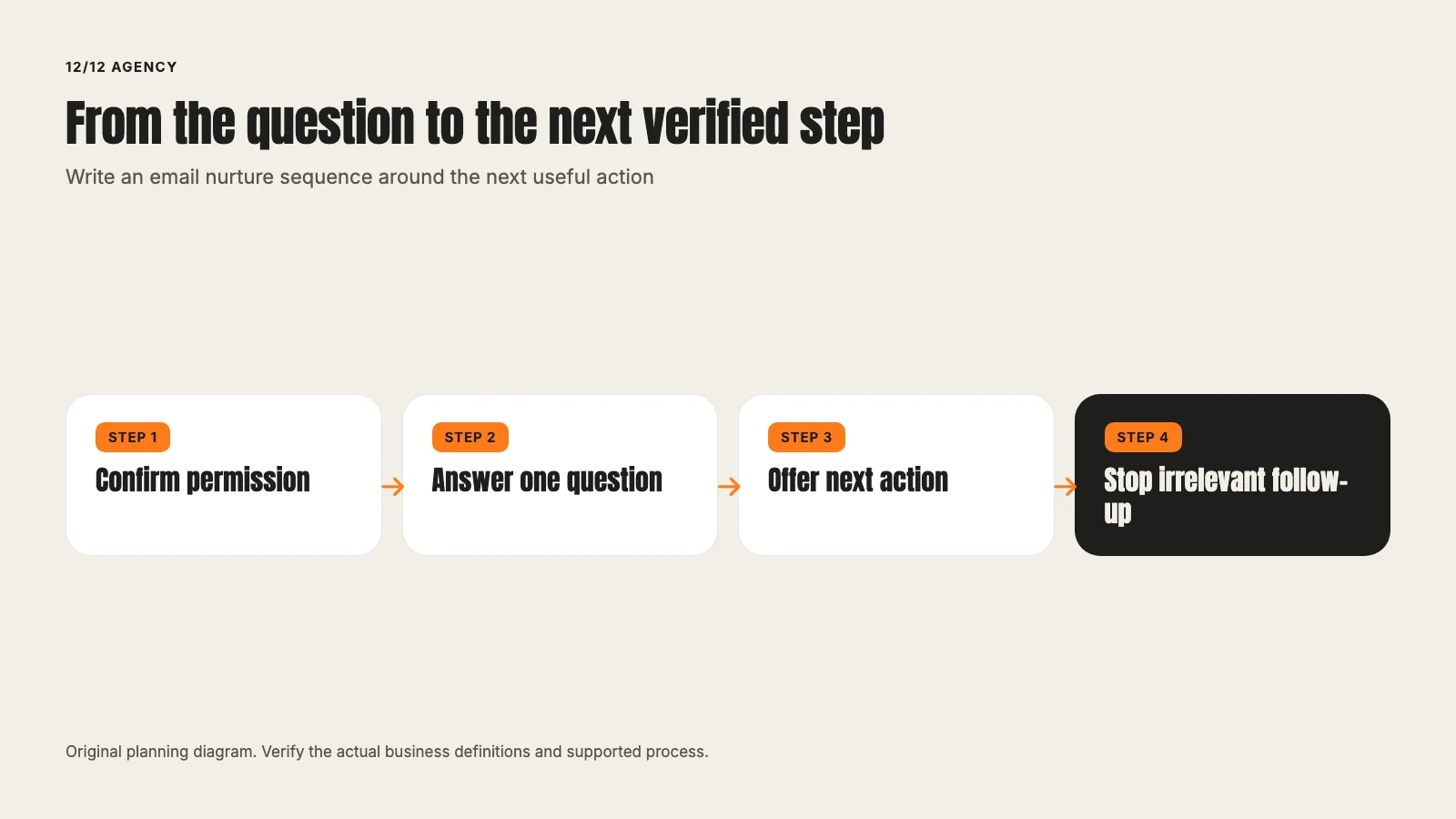
Record the actual request, eligible audience, source system, permission evidence and entry time. Identify what action ends the sequence and which records must be suppressed.
The fictional example concerns a software evaluation guide requested by an eligible business contact. The sequence's purpose is to help the person understand a supported scheduling workflow and decide whether to request a relevant conversation. It does not assume every downloader wants an immediate call.
Exit rules include a completed requested next action, opt-out, closed account or another approved state that makes the message irrelevant. The actual system must support the rules before automation is built. A spreadsheet label does not prove the sender checks state correctly.
Review sender and message requirements
The FTC's commercial-email guidance is a primary reference for covered US messages. The responsible reviewer should assess the actual audience, purpose, sender, opt-out and applicable requirements rather than classify every follow-up as transactional by default.
Google's sender guidelines provide current Gmail delivery requirements. Authentication, sender practices and unsubscribe behavior need an actual technical review. A well-written sequence cannot guarantee inbox placement or replace that setup.
Use the client's approved sending identity and reply destination. Credentials, customer lists and authentication changes do not belong in the writing brief. Those implementation actions require the responsible access and approval.
Message one: deliver the requested value
Eligible state: The guide request was accepted, the recipient meets the approved entry conditions and fulfillment has not been completed.
Subject: Your scheduling-workflow evaluation guide
Body: Thanks for requesting the guide. Start with the workflow map and use the questions beside it to check how your team manages rooms, availability and the next booking step. The guide explains the evaluation process; it does not assume every product supports the same setup. Open the guide when you are ready, and reply if you need help finding a particular section.
Action: Open the guide.
The actual destination must exist and deliver the promised resource. The final message should use the approved sender, current footer and required opt-out behavior. Do not substitute a general homepage for the guide without changing the promise.
Message two: answer the next evaluation question
Eligible state: The person remains eligible and has not completed the sequence's intended next action. Timing is a business and system decision, not a universal recommendation.
Subject: One question to check before choosing a booking tool
Body: When several rooms share a business, the useful question is how each room's availability is represented. Review the current workflow and ask which conflicts the product actually handles. A general calendar view does not prove every resource, staff or payment relationship is supported. The evaluation guide includes a short comparison you can use with your team.
Action: Review the workflow questions.
This message adds a specific useful explanation. It should not imply an integration or feature the product team has not verified. A person who has already moved into a relevant sales conversation may need a different approved path.
Message three: offer an appropriate conversation
Eligible state: The recipient remains eligible for this invitation, has not opted out and has not already completed the requested conversation step.
Subject: Bring your booking workflow to the next conversation
Body: If your team is comparing scheduling approaches, bring the workflow you need to support and the questions the guide raised. We can review the current product boundaries and identify what needs verification before a decision. If now is not the right time, you can keep the guide for later. Use the conversation request when it would be useful.
Action: Request a workflow conversation.
The confirmation should explain whether this is a request or a confirmed booking. Do not create false urgency, an expiring offer or a guaranteed outcome to make the invitation stronger.
Match the source to the buyer context
A SaaS evaluator may need a workflow explanation. An industrial buyer may need specification preparation. A home-services prospect may need an estimate process. The sequence should reflect the actual offer rather than reuse software language everywhere.
The existing SaaS demand-generation article can retain its distribution context. Nurture is one later job in that system, not a reason to duplicate the whole acquisition strategy.
Test states, not only rendering
Review a new eligible contact, an opt-out, a person who completes the next action immediately, a delayed event and a repeated event. Check both which message should appear and which must not appear.
Verify destinations, mobile rendering, reply handling and the current sender configuration. A test send to one inbox does not certify every email client or inbox placement. Keep real customer data out of screenshots and review files.
The conversion-tracking guide explains why a click and a business outcome need separate evidence. The sequence should stop based on the actual supported success contract, not an assumed page view.
Review the cohort and the next decision
Measure delivery evidence, reliable interactions, accepted next actions and later outcomes under a defined window. Explain the provider's metric definitions and known automated activity. Do not treat a reported open as proof that a person read the message.
A higher click rate can accompany an unclear promise. A smaller number of appropriate conversations can be more useful than more unreviewed form submissions. The report should preserve the stage and fit definitions.
Bring the buyer question and entry evidence to a sequence review.
Keep fulfillment and persuasion separate
The first message should deliver what the person requested through a verified destination. Later messages need their own useful purpose and eligibility. A resource request should not be used as a pretext to send unrelated offers indefinitely.
Review the reply path too. If the message invites a question, someone should know who receives it and how a relevant response is handled. A polished email can create a poor experience when replies disappear into an unattended address.
The sequence record should show the sender, reply destination, source event, current state, next action and suppression. That makes the copy review connected to the actual operating process. It also identifies a concrete missing dependency before automation, rather than treating a successful test email as proof that the whole lifecycle is ready.
Frequently asked questions
Want this run for your business?
Tell us where to send it and we'll follow up with the strategies that fit your market.