
SEO for roofers starts with the actual roofing job
David A · Founder, 1212 Agency
Published November 16, 2026
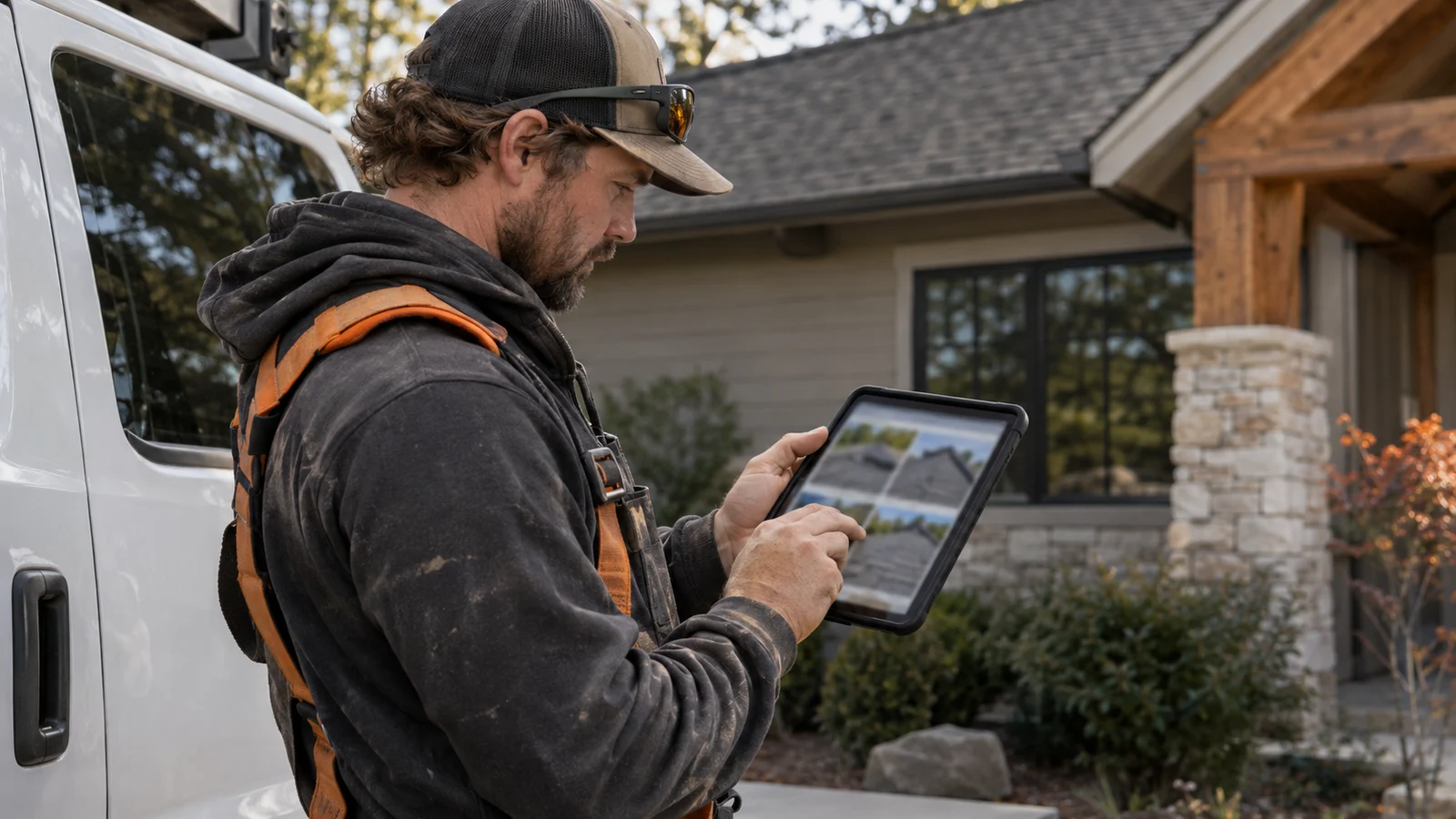
Plan roofing SEO around repair, replacement and real service coverage. Build useful pages with approved project evidence and a clear estimate handoff.
A homeowner investigating a small leak and a property manager planning a replacement need different information. If both searches lead to a page that says quality roofing services, the website has left the important explanation to the phone call.
Roofing SEO starts with that job distinction. It makes accurate service information discoverable and helps the visitor understand whether the company is a fit. It does not require a new page for every possible combination of roof type, city and adjective.
Map the service before mapping keywords
Ask the roofing team which work it actually accepts. Separate repair, replacement, inspection and commercial projects where those jobs change the process, evidence or estimate requirements. Record material and property limitations rather than assuming the business handles every roof.
Review current search results and existing pages for each family. A service page should answer the commercial decision. An educational article can explain how to prepare for an estimate or compare process questions. Avoid publishing a second broad roofing marketing article that competes with the existing roofing service page.
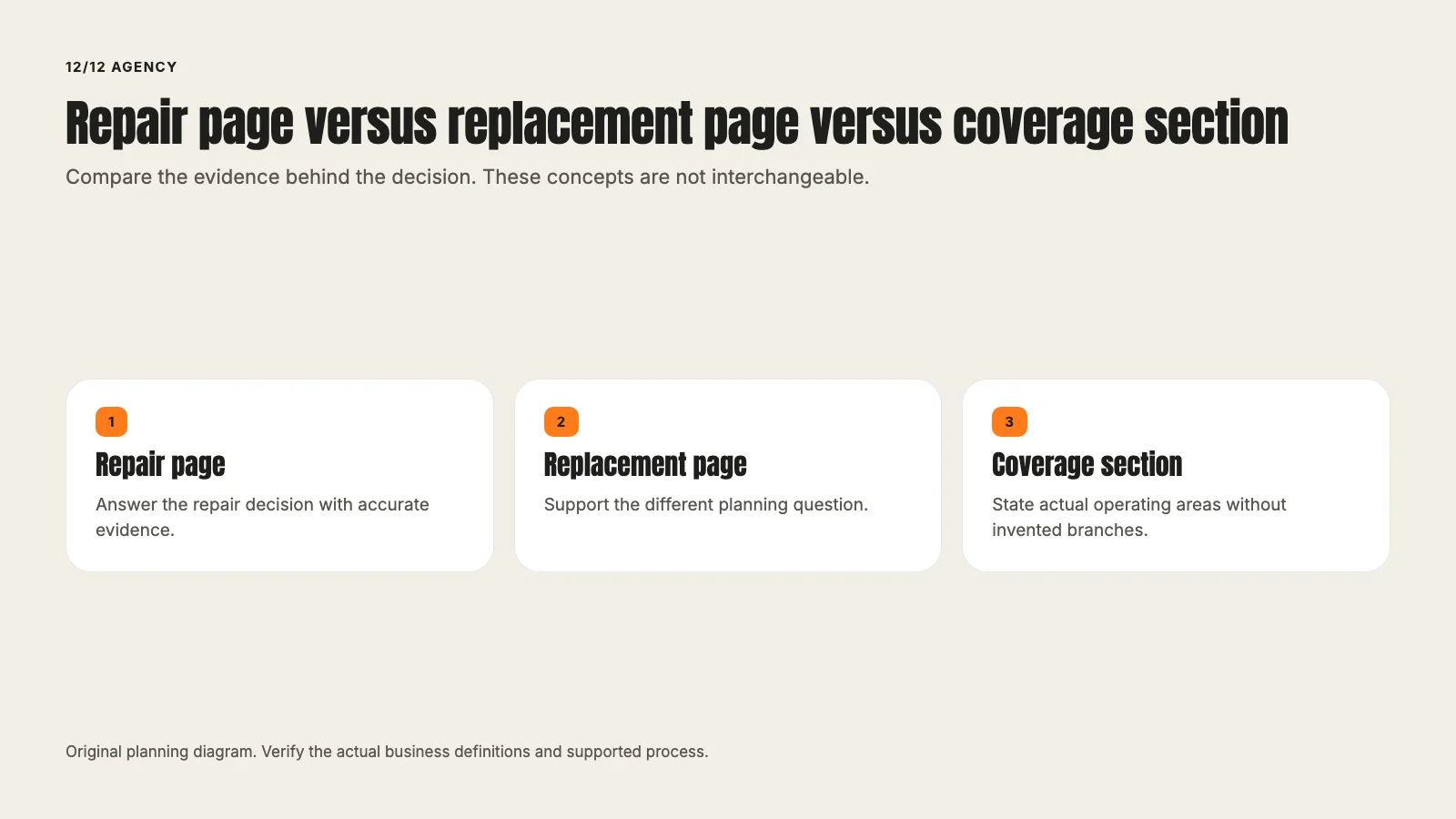
For a fictional roofer, a repair page could explain the assessment process and supported property types. A replacement page could explain scope review, project planning and how to request an estimate. Neither should diagnose structural safety or promise that a particular repair is sufficient from a web description.
Decide whether a location needs its own page
Real coverage matters, but a place name is not the whole answer. Ask whether a separate page would add useful local evidence, operating details, project context or service differences. A single accurate coverage page may answer nearby towns better than twenty repeated pages.
Do not invent local offices, imply an address is staffed when it is not or use project photos as proof of work in an area they do not represent. Google's Business Profile rules require accurate representation. Search visibility is not a reason to misstate the business.
A genuine branch can have its own useful information and operational responsibilities. A service boundary can be explained without pretending every covered town is a branch.
Build project evidence that supports the claim
Approved project photos can help a buyer understand the type of work. Add accurate context: the relevant service, material, challenge and scope that may be disclosed. Before-and-after images should not imply a universal result or hide meaningful differences.
Confirm licenses, warranties, financing and insurance-related language with the responsible business person and qualified reviewer where needed. Do not turn a marketing article into technical or insurance advice. An estimate request is not proof of coverage or a guarantee of project suitability.
Use original explanations from the roofing team. Ask what makes a request unsuitable, what information helps the first conversation and what customers often misunderstand. Those answers usually provide more useful detail than another paragraph about trusted professionals.
Make the estimate path specific
Tell the visitor what happens after the request. Does the office call to confirm fit? Is an inspection scheduled only after review? Which areas and project types are accepted? Avoid promising an instant appointment if the form simply sends an email.
Collect the information the team actually uses. A project type and general service area may be enough for initial routing. Avoid unnecessary personal detail or document uploads. Check mobile fields, errors and the successful confirmation state.
Measure the accepted request separately from the form button click. Later stages can include contacted, inspection booked, estimate issued and job won, but those definitions must match the business's records. Our existing conversion-tracking guide explains why those stages should stay distinct.
Review discovery and business fit together
Use available Search Console and analytics evidence to inspect relevant queries and pages, without equating impressions with inquiries. Google does not guarantee indexing or ranking every eligible page. A crawler finding a page does not prove that Google indexed it.
Review a defined request cohort with the office team. Did inquiries concern supported work and areas? Which pages left people with the wrong expectation? Do not compare this month's search visits with unrelated jobs closed this month if the sales cycle differs.
A useful first sequence is to improve the most important existing service page, verify its evidence and contact path, then add only the distinct answers the website still lacks. More URLs are not the objective.
Bring the service mix and the pages customers currently reach to a search planning session.
Build a roofing-page evidence card
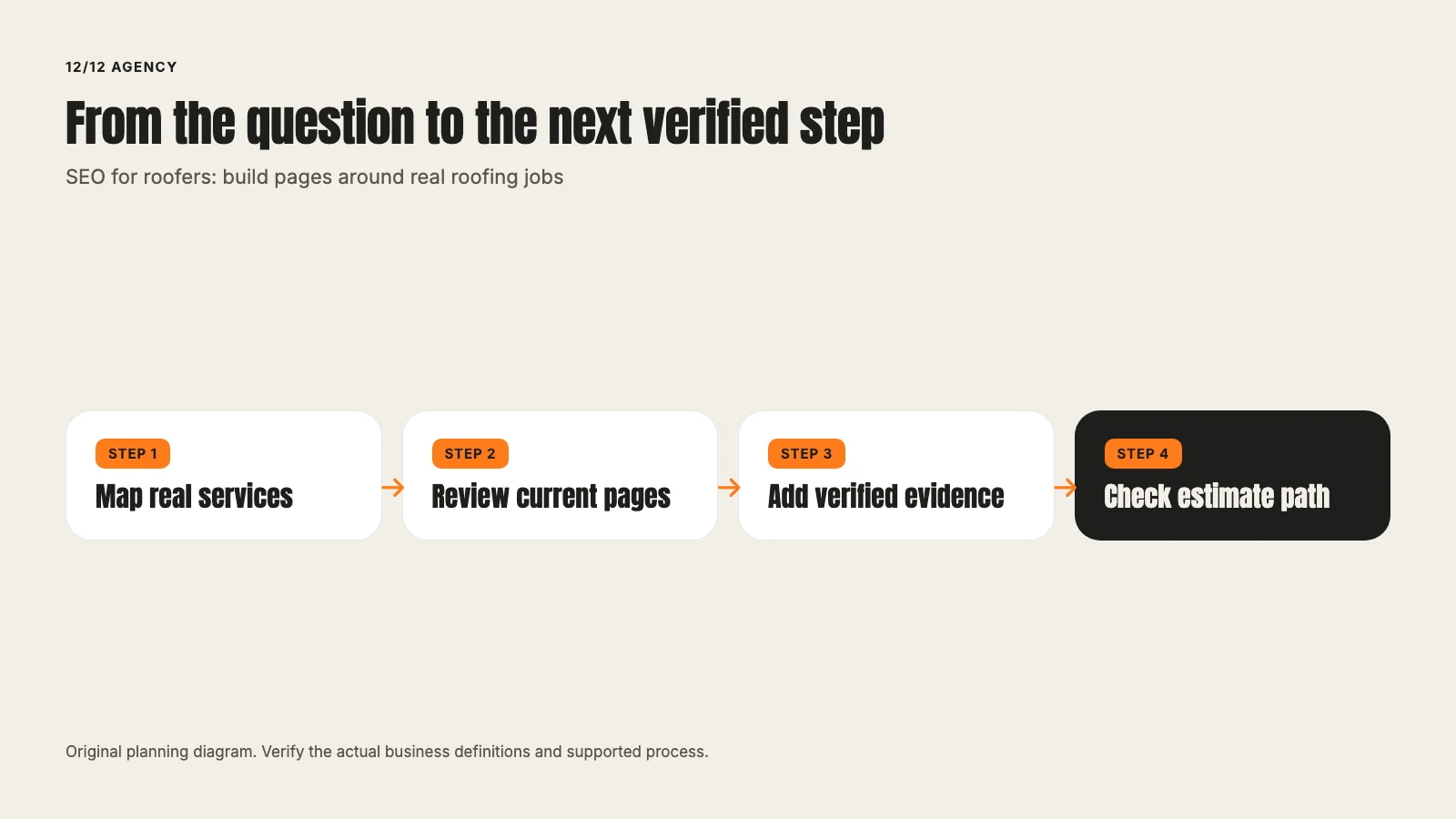
Take one important existing page and record its supported job, intended reader, approved project evidence, service boundary and estimate route. For a fictional repair page, ask whether the visitor can understand the assessment process without assuming that every leak has the same cause or solution. A replacement page should answer its own planning questions rather than copy the repair description.
The home-services overview can connect those jobs. If the business also runs search campaigns, the Google Ads service context and account audit guide help keep paid acquisition definitions separate from organic discovery. A paid conversion trend should not be relabeled an SEO result.
Use Google's technical requirements for the availability and indexing-eligibility checks. Use its Business Profile representation guidance for accurate local identity. Neither source can verify the roofer's actual workmanship, credentials or coverage; those facts come from the business and appropriate reviewers.
Record a concrete observation before proposing more copy. The current page may omit the supported property type, show an image without context or send every job to an unclear form. Each issue has a different acceptance check. The property-type statement needs business verification. The image needs an accurate caption and permission. The form needs an accepted request and routing receipt.
Choose between a new page and a better section
Imagine the team proposes separate pages for roof replacement company and roofing replacement contractor. Ask what useful answer would differ. If the service, evidence and next step are the same, one stronger page is usually the coherent plan. A genuinely distinct commercial project process may justify another answer, but its source and scope should be explicit.
This decision also protects maintenance. Every new page adds a place where hours, service boundaries and claims can become stale. Give the page a human reviewer and an update trigger. A changed service offering or withdrawn warranty statement should prompt a factual review, not merely a new date.
The final page card should identify the current URL, proposed change, supporting evidence, dependencies and next verification. It can be reviewed before publication without inventing a ranking forecast. A useful next step is to finish one complete service explanation and handoff, then decide whether another distinct buyer question remains unanswered.
Make the next review question specific
After improving the repair page, ask the office whether requests now arrive with a clearer understanding of the supported job. Record the observed questions rather than assuming the new copy changed every inquiry.
If callers still ask about replacement, inspect whether navigation helps them reach that explanation. If they ask about an unsupported material, clarify the boundary using business-approved wording. If source information is missing, investigate that handoff separately from the SEO content.
These are different decisions with different evidence. Keeping them separate makes the page easier to maintain and prevents a traffic change from becoming an unsupported claim about project quality or revenue.
Frequently asked questions
Want this run for your business?
Tell us where to send it and we'll follow up with the strategies that fit your market.