
LinkedIn Lead Gen Forms: plan the handoff first
David A · Founder, 1212 Agency
Published November 16, 2026

Plan a LinkedIn form around a useful offer, necessary fields and appropriate follow-up. Verify the accepted record and sales path before treating downloads as leads.
A pre-filled form can make submission easier, but it does not decide whether the offer is useful, the request is appropriate or the sales team can follow up. Those decisions belong in the plan before the form is built.
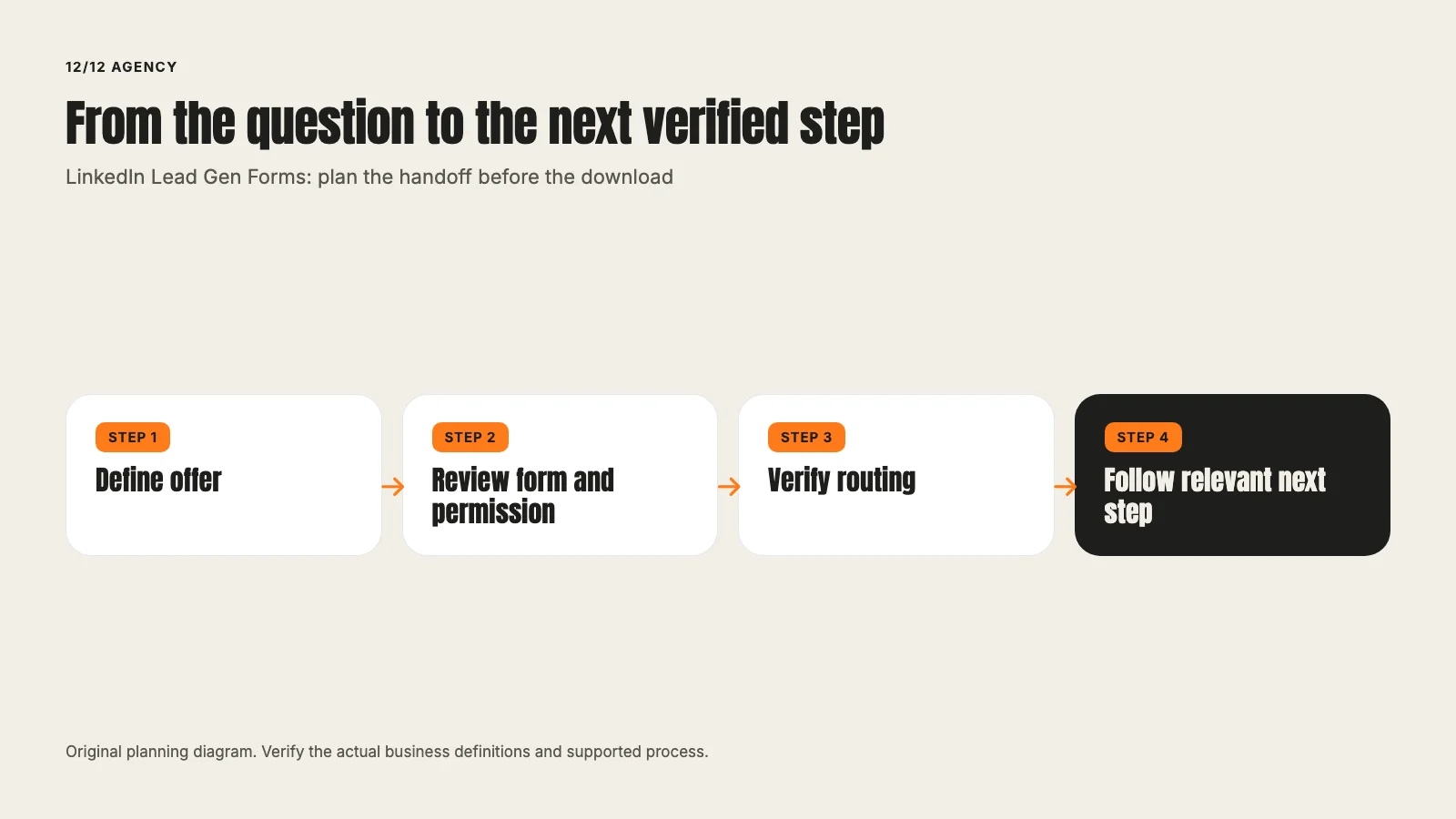
Start with what the person expects to receive and what the business will do next. Then verify the supported fields, permission, retrieval and later outcome. This guide explains that process without promising a particular CRM integration or cost per lead.
Give the form a specific job
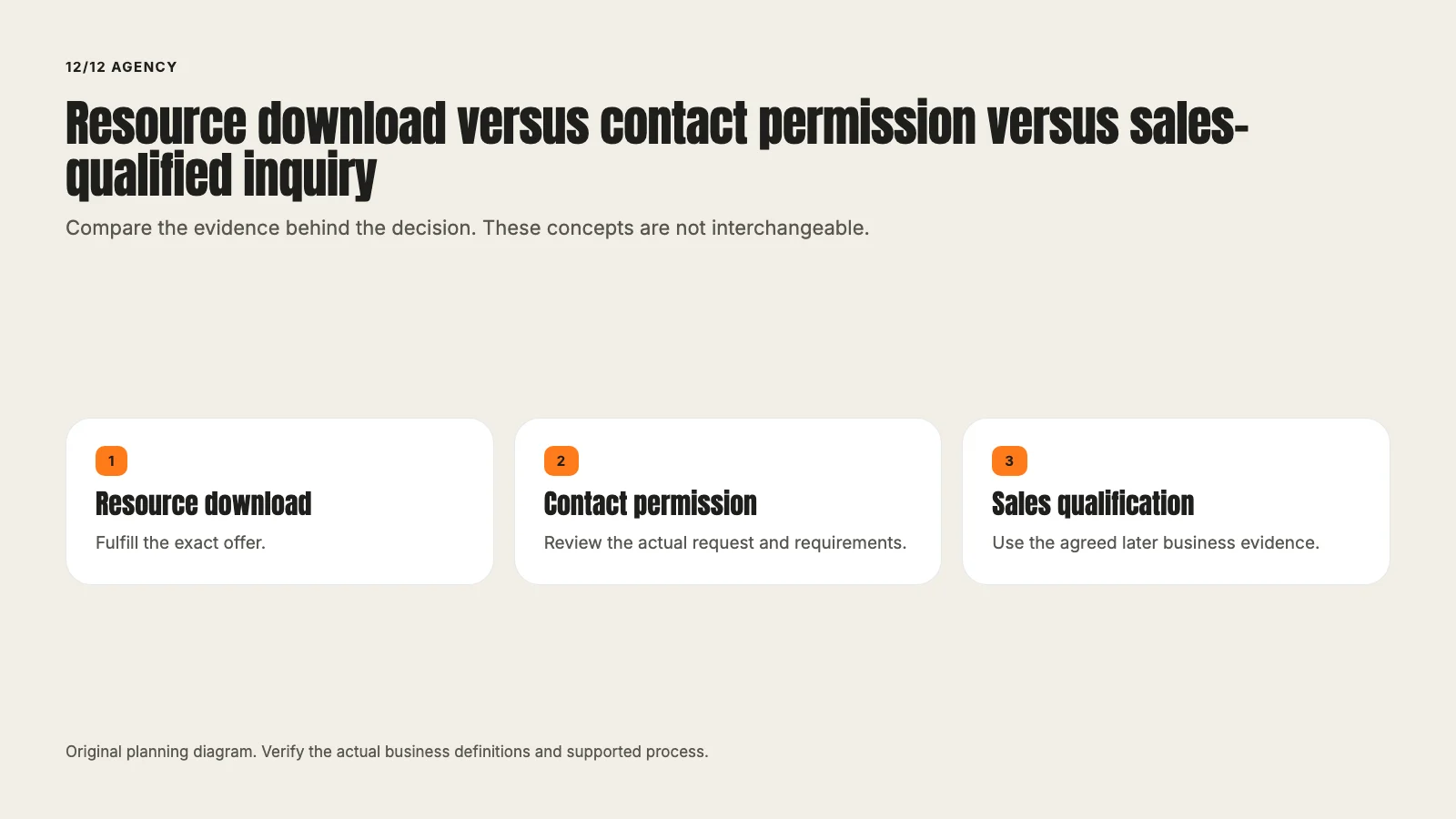
A resource download, event registration and demo request are different offers. The headline, fields, confirmation and follow-up should preserve that distinction.
The LinkedIn service page supplies the commercial context. A SaaS buyer may need a product evaluation resource, while a manufacturing buyer may need technical preparation. Do not label every professional contact sales-qualified because a profile field is available.
Write the offer in one sentence and identify the evidence that it was fulfilled. If the promised guide is unavailable or the confirmation leads somewhere else, the form has not completed its job even if the submission count increases.
Check the actual supported form
LinkedIn's current Lead Gen Form specifications describe supported form elements and fields. Review that source and the actual account before building a tutorial or relying on a particular control.
Do not copy old character limits, interface names or field availability without verification. This article focuses on the decision process rather than a fragile sequence of clicks.
The platform's pricing overview also shows why the objective and billable event matter. A recorded form outcome is not the same as a business-qualified opportunity, regardless of the platform charge.
Ask for information the receiving team uses
Each field should support fulfillment, routing or an appropriate next conversation. A work context may be useful for a B2B resource. An extra question that nobody reads adds friction without creating qualification.
Ask the receiving team what changes its response. A product use case may affect which specialist follows up. A general company-size band may be relevant in some scopes, but it should not become an unreviewed proxy for a sensitive or inappropriate criterion.
Avoid requesting confidential project details, personal financial information or credentials. A marketing form is not a secure technical intake merely because it appears on a professional platform.
Make permission and expectations concrete
The person should understand the offer, the business behind it and what follow-up the reviewed process supports. Do not silently turn a download into a request for unrelated outreach or add the contact to every available sequence.
The actual wording, jurisdiction, product and communication method need the responsible review. A privacy-policy link is part of the interface, not proof that every later use is permitted.
Separate fulfillment from marketing nurture and sales contact. They may have different purposes and rules. Record the approved sender, destination, suppression and response process before automation is implemented.
Design the confirmation as a real handoff
The confirmation should explain what happened and how the person receives the promised item or next step. A request received message is different from a meeting confirmed message.
If the offer is a resource, verify the destination and access. If it is a demo request, explain the actual scheduling or follow-up process. Do not promise an instant booking unless the supported system confirms one.
Check mobile behavior and the resulting page. A correct form can still lead to a broken download or a general homepage that never delivers the promised answer.
Verify retrieval and routing
Map where the accepted record is retrieved, which fields arrive, who receives it and how failures are handled. Manual export and an approved automated connection have different operating requirements.
Do not assume that a connector is configured because LinkedIn and the CRM both have integration documentation. Verify actual permissions, field mapping and delivery evidence for the business.
The conversion-tracking guide explains the general evidence chain. A platform submission, CRM contact and later meeting are separate claims. The B2B lead-generation guide can support the stage definitions used by sales.
Use one approved labeled test
Agree on the test identity and consequences before submitting. A real form may notify staff, enroll a contact or create a deal. The test plan should identify those effects and the record to inspect.
Check fulfillment, necessary fields, source information, routing and suppression. Preserve the QA identity and exclude it from business reporting. Do not replay the form or create another contact because a dashboard has not refreshed.
If an integration assigns a deal value automatically, that QA amount is not commercial pipeline. Report it as a test artifact and leave value or stage changes to a separately approved action.
Follow the right outcome window
A download can be reviewed for fulfillment and relevance. A demo request can be reviewed for contact and booking. A later opportunity needs the agreed qualification evidence. Do not collapse those stages into one conversion rate.
Use a defined entry cohort and enough time for the intended next action. Keep missing evidence and still-open outcomes visible. An absent CRM update is not proof that the contact was unsuitable.
The paid media overview can connect the form work to the larger campaign plan. Creative, offer, audience and sales handling all affect the result, so the form alone should not receive credit or blame for every outcome.
Work through a fictional form brief
A fictional software company offers a current workflow evaluation guide. The form's job is to deliver that guide to an appropriate professional audience. Necessary fields are chosen for fulfillment and the approved handoff, not for creating a long profile.
The confirmation leads to the actual resource. The internal plan records who handles a relevant reply and which later invitation, if any, is permitted. A resource downloader remains a downloader until a separately verified inquiry or qualification exists.
If the business later wants to test a demo offer, that is a different promise and may produce a different cohort. Compare the business purpose and evidence instead of treating the lower form cost as a complete winner.
Keep the review packet actionable
Include the exact offer, final form, field purpose, permission review, confirmation, retrieval method, routing, suppression and outcome definition. Attach the actual test receipt without exposing private customer information.
The next job may be a missing field repair, a clearer confirmation, an integration verification or a bounded offer test. Budget, launch and targeting remain approvals.
Bring the offer and receiving process to a form review.
Make the retrieval failure visible
The review plan should say how the team discovers that a form record did not reach the receiving system. A successful submission in the platform and an absent CRM contact are different evidence. The gap needs an investigation, not an assumption that the person never submitted.
Record the supported retrieval method, relevant permissions, necessary fields and responsible role. If a manual process is used, identify its operating coverage. If automation is used, verify the actual delivery receipt and exception handling.
This contract helps the business maintain the form after the initial test. A new field, expired permission or changed routing rule can alter the handoff. The next reviewer should be able to identify the affected step without rebuilding the history from memory or exposing personal records in a public troubleshooting document.
Frequently asked questions
Want this run for your business?
Tell us where to send it and we'll follow up with the strategies that fit your market.