
Service-area pages need a useful local answer
David A · Founder, 1212 Agency
Published November 16, 2026
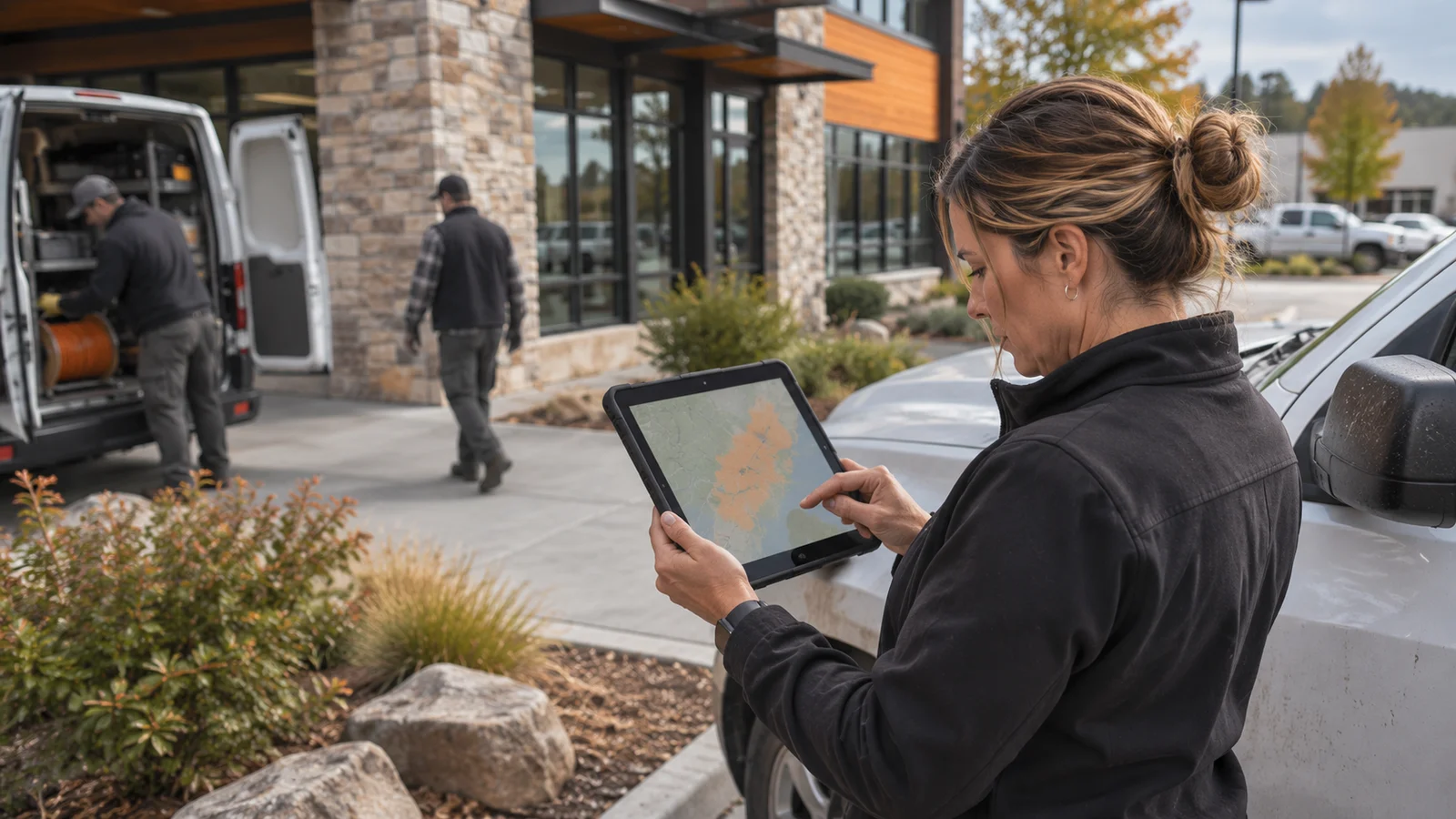
Decide when a service area deserves a separate page. Use real coverage, relevant evidence and a clear customer path instead of repeated city-name pages.
A service-area page should help someone decide whether a business can serve a real job in a real place. If the only difference between twenty pages is the town name, the website has created twenty addresses for the same answer.
The better question is what the local reader needs to know that the current service and coverage pages do not explain. That question determines whether to create a page, improve a shared answer or keep the idea in the backlog.
Begin with genuine coverage
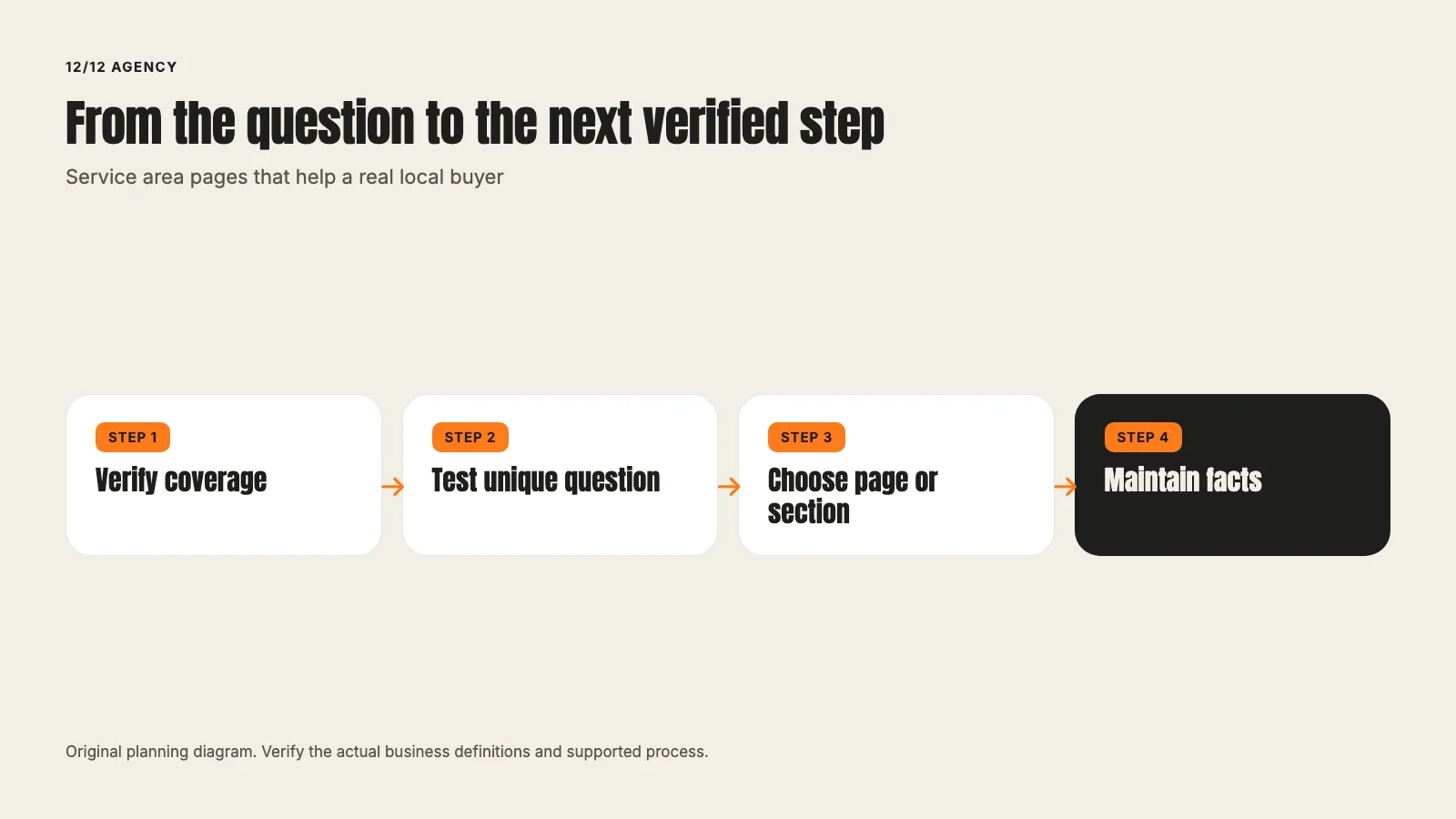
Ask operations which areas the business can reliably serve and under what conditions. Travel time, project scale, dispatch availability and licensing boundaries may affect the answer. Do not infer coverage from a campaign's map or an agency's keyword spreadsheet.
A home-services business may travel to customers. A local retail business may primarily receive visitors at a location. Their local pages should explain those actual operating models.
Use Google's business representation rules as a baseline for truthful public identity and location information. A town within the service area is not automatically an office, staffed branch or separate eligible business profile.
Separate the service question from the area question
A buyer may need to know what the company does, whether it covers the property and what happens after an inquiry. Sometimes one service page and a clear coverage section answer all three.
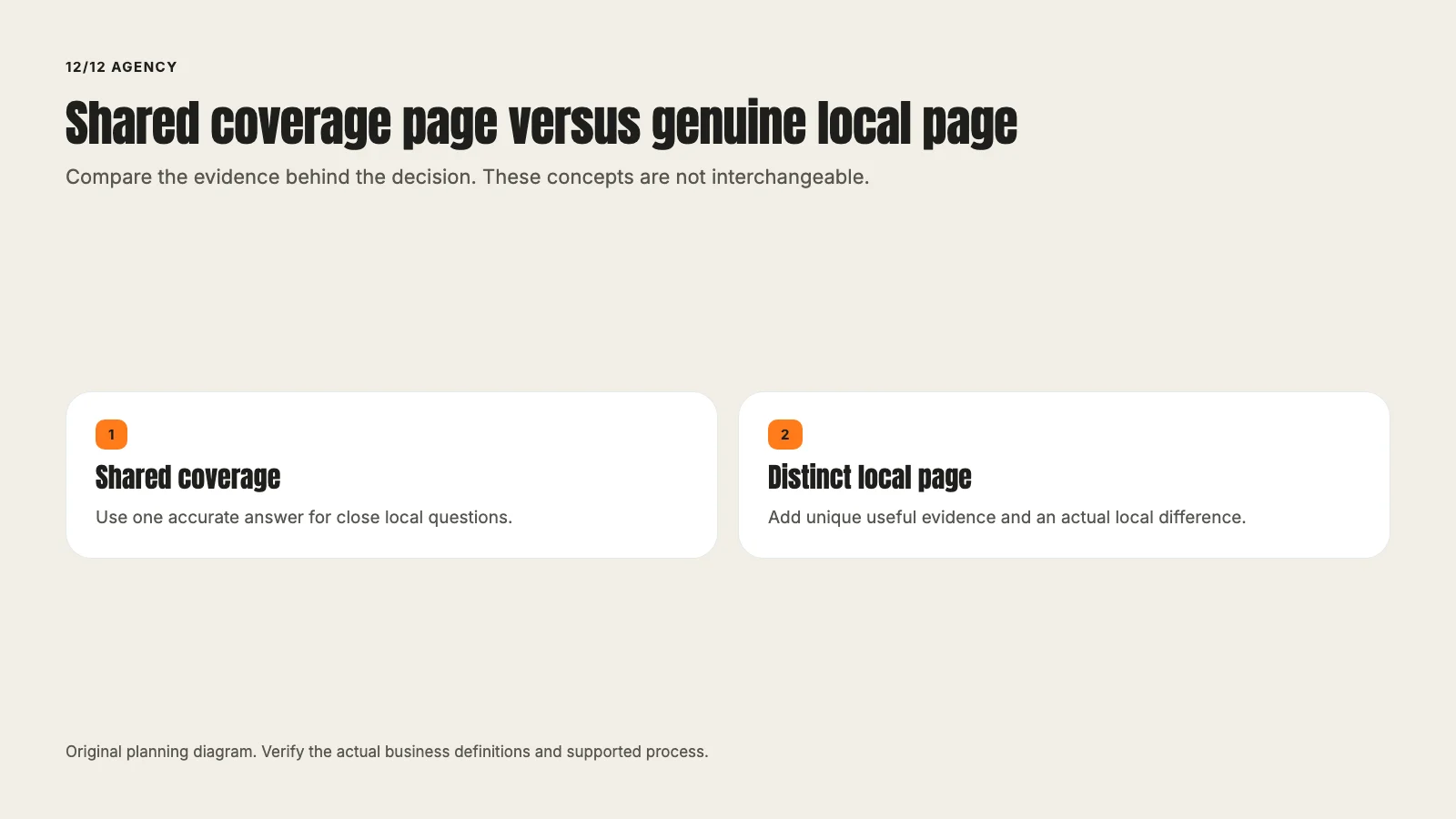
Separate area pages become useful when there is a meaningful local explanation: a genuine location, distinct service availability, approved relevant work, logistics or another buyer need the shared page cannot answer well. The difference should survive removal of the town name from the headline.
For a fictional remodeler, a page about a real staffed design studio can explain visits, consultation preparation and local project context. A nearby town served by the same team may need only accurate coverage information on the shared remodeling page.
Apply a page decision test
Write the proposed page's reader question in one sentence. Then list the unique evidence and next action. If those are identical to an existing page, improve the existing answer or add a useful section.
Check whether the local difference changes the customer's decision. A construction constraint that requires qualified technical explanation may matter, but a marketer should not invent local building advice to create uniqueness. Obtain the appropriate source and review if the page relies on it.
Google's spam policies address content created to manipulate search, including doorway patterns. The practical editorial response is to make each page useful on its own and avoid mass-produced location variations without additional value.
Plan evidence before copy
Suitable evidence can include an accurate description of the location, approved relevant project context, verified service availability or a real local team. Not every page needs all of those elements. It needs the evidence required for its particular claim.
Use project images carefully. A photo from one area should not be relabeled as work in another. Do not expose a customer's address, drawings or private situation. A broad geographic description and a cleared explanation may be sufficient.
If useful local evidence is unavailable, that is a specific dependency. It does not require filling the gap with generic city history or unsupported claims about local expertise. A shared coverage page can remain the better answer.
Keep the commercial page clear
The local page should explain the supported service and the actual next step. A roofing page can distinguish repair and replacement. A pool-builder page can distinguish new construction and renovation. Those service distinctions should not disappear beneath a long list of towns.
Avoid making an area page compete with every service page. Choose its main purpose and link to the relevant detailed explanation. The reader should be able to understand how the business is organized.
A useful internal link has a reason: compare the supported project types, check the estimate process or review the actual visit location. Repeating exact-match anchors everywhere does not make the architecture clearer.
Inspect existing overlap before consolidation
Inventory the current URLs and their purposes. Review available query, visit and business-outcome evidence. A page that looks similar may still have a different useful job, while a page with a unique title may repeat the same content.
Do not delete or redirect pages merely because a spreadsheet labels them duplicates. A consolidation needs a proposed destination, content that must be preserved, link changes and a verification plan. Approval comes before live removal or routing changes.
If a future page is not implemented, do not link to it publicly as if it exists. The planning inventory can record the proposed URL until the actual page is ready.
Preserve the inquiry path
Make the service boundary visible before the person submits a request. Ask only the information needed for routing and preparation. A general area field may be sufficient for initial fit; a detailed address should have a justified purpose and approved handling.
Verify the form, confirmation and business handoff. The conversion-tracking guide explains why a button click is not an accepted request or a booked job. Local SEO reporting should preserve those stage distinctions.
Use labeled tests with agreed consequences. Do not create extra appointments or repeatedly contact an office to populate an analytics report. The customer path is an operating system, not a demonstration dataset.
Review whether the page earned its place
After an approved publication, review availability, search evidence where accessible, relevant visitor behavior and the inquiries the page supports. Google indexing and rankings are not guaranteed by a completed checklist.
Ask the office whether the page sets accurate expectations. A page that produces fewer unsuitable calls may be useful even if raw inquiry volume falls. That interpretation needs the actual cohort and exclusion reasons, not a guess from a traffic graph.
Maintain the page when the business changes. A location closure, new operating boundary or unsupported service can make the old explanation inaccurate. Assign a review trigger rather than changing the date without checking the content.
Write the page decision in a sentence
For each proposed area URL, complete this statement: this page helps a specific reader understand a local fact that is not adequately answered elsewhere. Then name the evidence supporting that fact.
A genuine visit location can explain recognition, access and the supported service at that site. A shared coverage section can explain nearby areas served by the same team. A technical local constraint requires the appropriate current expert source. These are different reasons for content and should not be replaced by generic city history.
If the statement cannot be completed without repeating the main service page, keep the question together. The inventory can still record the keyword as a supporting phrase. A merged section is a deliberate answer, not a missing page.
This also makes review more concrete. The business can approve the actual coverage and evidence rather than a broad instruction to create pages for every town. After implementation, the acceptance check should verify the public statement, useful navigation and contact path. Search visibility remains a later observation rather than a guarantee attached to the page count.
Bring the current coverage map and page inventory to a planning review. Start by identifying the local answer the buyer still needs.
Frequently asked questions
Want this run for your business?
Tell us where to send it and we'll follow up with the strategies that fit your market.