
Self-storage marketing starts with available units
David A · Founder, 1212 Agency
Published November 16, 2026

Connect self-storage marketing to current availability, useful location information and verified move-ins. Keep reservations, occupancy and collected rent distinct.
A self-storage campaign can generate interest in a unit the facility cannot currently offer. That is an inventory and expectation problem before it is a creative problem. The marketing plan should connect the public promise to a current availability source and a clear next step.
Start with the facility, unit context and action the team can fulfill. Then follow the inquiry through reservation and move-in evidence. This guide uses fictional scenarios and does not promise a particular occupancy gain or software integration.
Define the facility and availability source
Identify which location the page represents and who verifies the unit information. The business should define the source of current availability, how often it changes and what the website may accurately claim.
Do not assume that the marketing site has a live inventory feed. If availability is checked by staff, explain that process. If a supported integration exists, verify its actual fields, timing and failure behavior before describing it as real-time.
The existing self-storage service page remains the commercial explanation. The broader real-estate overview can connect the engagement without creating another broad storage-agency page for the same intent.
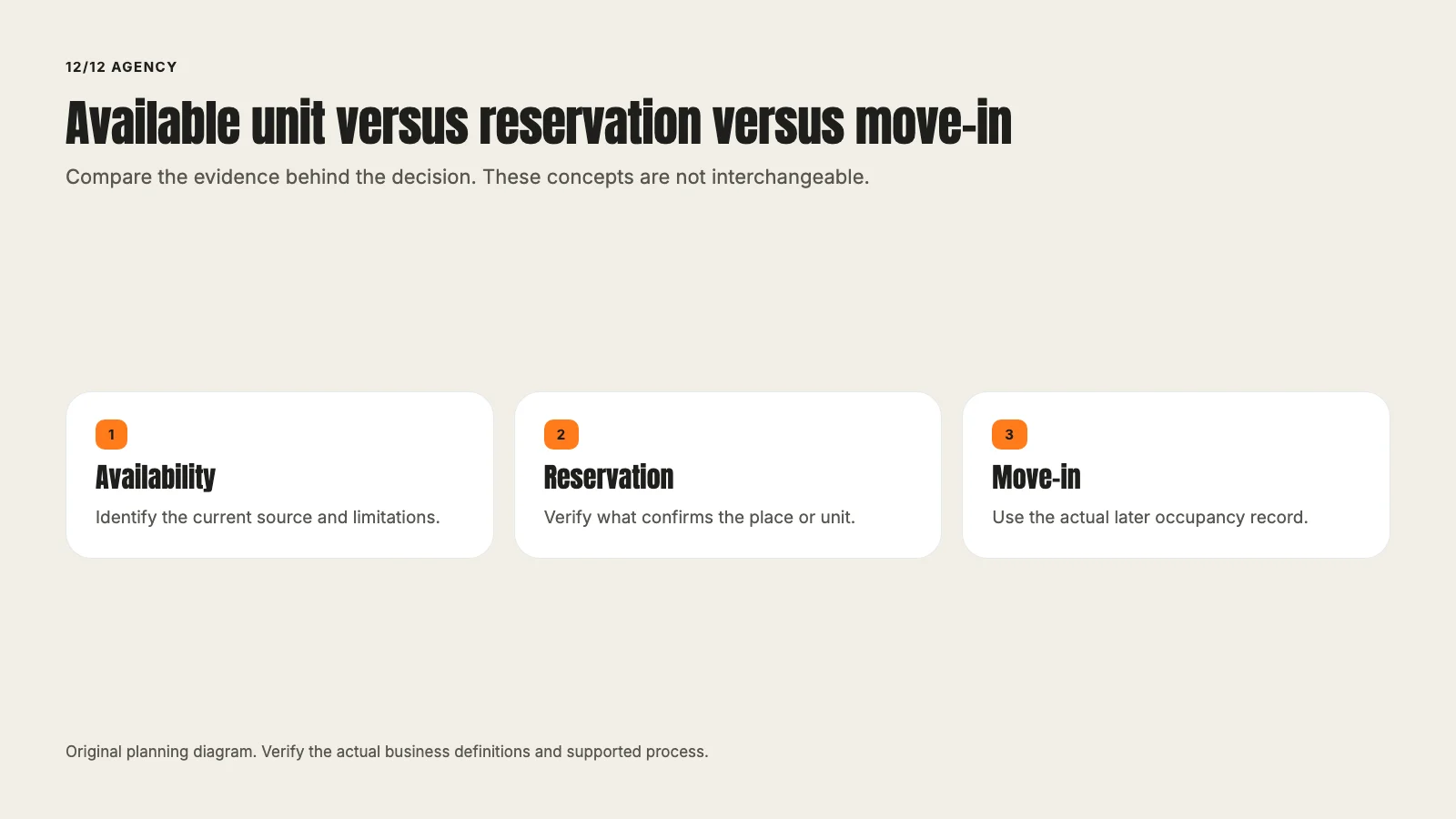
Separate unit research from a reservation
A visitor comparing unit dimensions may need a clear explanation of the available categories and access conditions. Someone ready to reserve needs to know what the reservation does, whether it is confirmed and which terms apply.
Do not treat a size-guide view as a move-in. A completed inquiry is not a reservation unless the system actually records that stage. A reservation may still differ from an executed rental agreement and collected payment.
Use accurate, approved descriptions for climate features, access hours, security measures and restrictions. A general photograph cannot substantiate every security or environmental claim. The facility team should approve what customers may reasonably infer.
Build one useful location answer
A location page should help someone recognize the facility, understand how to reach it and choose the appropriate next action. Show current public details and approved images. Avoid generic local history added only to create more text.
For businesses represented on Google, accurate business information is the baseline. A service area or nearby neighborhood is not automatically a separate staffed location. Do not multiply fictional branches to cover more search phrases.
Google's local-ranking guidance also makes clear that a better map position cannot simply be purchased. The practical work is truthful information and a useful customer path, with ranking limits acknowledged.
Align the campaign with the unit context
Choose the specific customer question and verify that the destination answers it. A campaign about a particular unit category should not imply that every size is available. If a promotion is used, the current terms and eligibility need approval.
The Google Ads service page can support a scoped search discussion. The Meta service page may support another acquisition role, but neither channel creates inventory or authorizes an unsupported offer.
Review search and message fit before comparing click costs. A campaign attracting people who need an unavailable unit may look active while producing work the facility cannot serve.
Keep the first form practical
Ask what staff need to answer the request. Location, desired unit category and intended timing may be useful. Do not collect a complete rental application through an unreviewed marketing form merely because those fields exist in another system.
Explain what happens after submission. If staff confirm availability, say so. If the system truly completes a reservation, verify the confirmation and the terms that govern it. The user should not need to infer whether a unit is being held.
Check mobile fields, errors, confirmation and routing. A page can load correctly while the chosen facility or unit category fails to reach the receiving team.
Follow a defined cohort through move-in
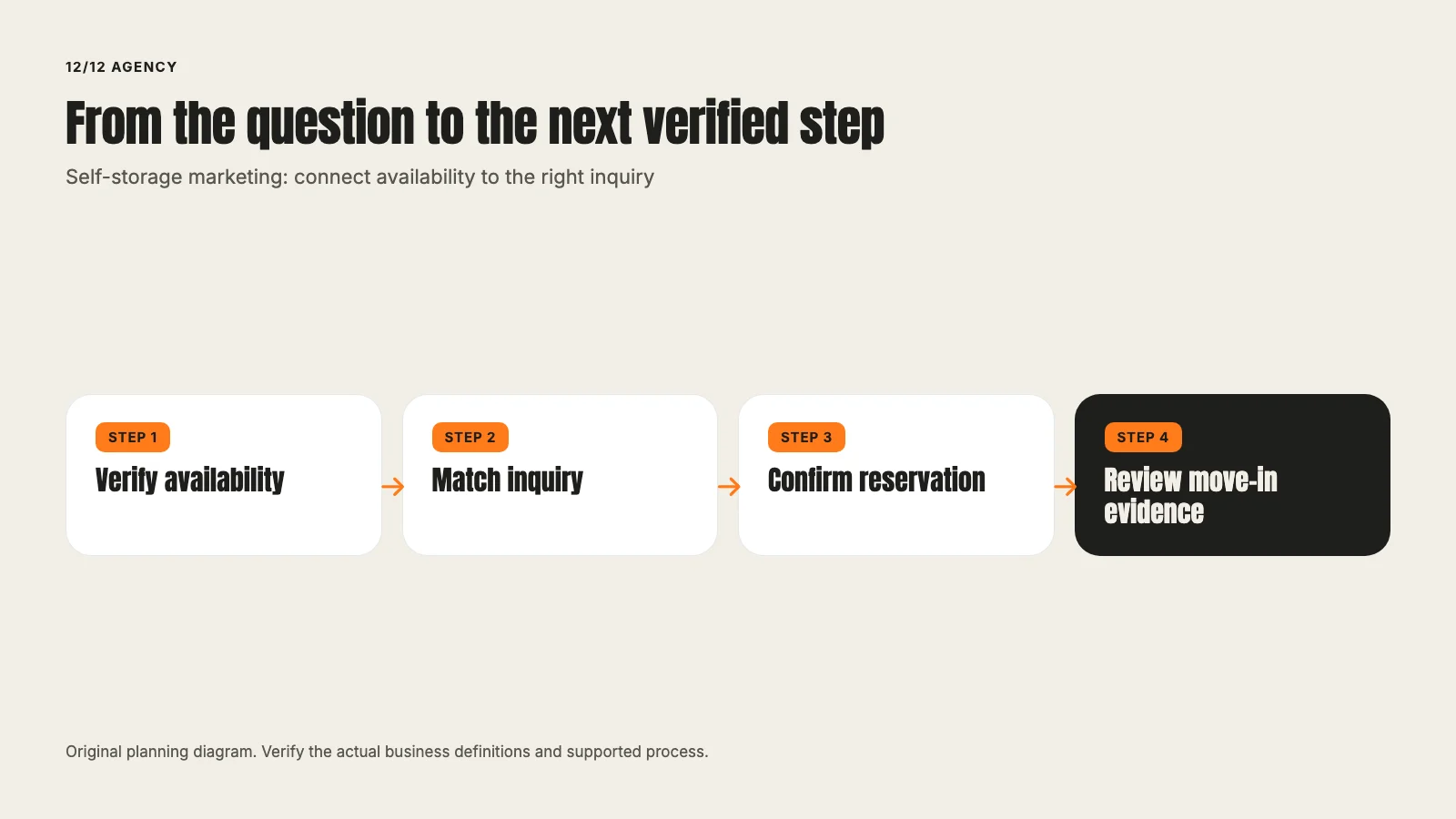
A useful stage map can include accepted inquiry, availability confirmed, reservation, agreement completed and move-in recorded. The business defines each stage and source. Record actual dates rather than assigning the final status to every point in the journey.
Use one entry cohort and a consistent observation window. Keep canceled, duplicate, test and still-open records separate. Do not assume that every unanswered inquiry is unsuitable or that every reservation will become occupancy.
The conversion-tracking guide explains the broader distinction between technical receipt and business outcome. A tag reporting success does not establish that a customer moved in or paid rent.
Model costs without calling a lead rent
Suppose a fictional facility includes $2,500 of media and $500 of other acquisition work in one test. The included cost is $3,000. If its completed cohort contains 30 accepted inquiries and six verified move-ins, cost per inquiry is $100 and cost per move-in is $500.
Those numbers are illustrations, not storage benchmarks. The model does not establish rental revenue, occupancy duration or profit. A contract amount and collected rent may follow different timing.
If the team wants a contribution scenario, use verified or explicitly assumed revenue and eligible costs over a named period. Do not multiply a current rent by an invented average lifetime and present it as guaranteed customer value.
Account for capacity before expanding
Review the unit mix and operating constraints. A facility may have open capacity in one category and limited availability in another. An average occupancy percentage can hide that distinction.
The next marketing decision should reflect the actual opportunity the facility can serve. A full unit category may need an accurate inquiry or waitlist explanation rather than more immediate-reservation advertising. A waitlist is also a distinct promise and process that must exist before it is offered.
Changes to pricing, promotions, targeting and spend need the responsible approval. A marketing worksheet should not automatically recommend discounts or budget increases from one occupancy input.
Verify safely and maintain the facts
A live test may create a reservation or notification. Agree on the exact consequence, use one labeled identity and preserve the receipt. Do not reserve scarce inventory or cancel a booking without specific approval.
Assign a maintenance trigger to availability and operating information. A changed unit offer, access policy or location detail can make a previously useful page inaccurate. A revised date alone does not establish a substantive review.
Give each reservation stage an evidence label
An availability question can be recorded when the system accepts it. A reservation requires the actual supported confirmation. A move-in requires the business's later record. Payment and occupancy may have their own timing and should remain separate.
For a fictional facility, the review might find that inquiries reach staff but the unit category is missing. That is an intake repair. Another review might find that the category is recorded accurately but availability changed before follow-up. That is an inventory expectation and operating-process question.
Do not solve both with a generic message saying units are always available. The proposed correction should name the observed cause and the evidence that will verify it. If a current integration is unavailable, the page can still explain that staff will confirm the request, provided that is the actual process.
A transparent inquiry path can be useful without promising automatic inventory synchronization. The marketing plan should represent what the facility can fulfill today and identify any later feature as a separate implementation dependency.
Bring the facility's availability source and reservation process to a review.
Frequently asked questions
Want this run for your business?
Tell us where to send it and we'll follow up with the strategies that fit your market.