
Real-estate leads: define the property and the next step
David A · Founder, 1212 Agency
Published November 16, 2026

Connect real-estate marketing to accurate property information, useful inquiries and a verified sales handoff. Keep housing-policy review and outcome labels clear.
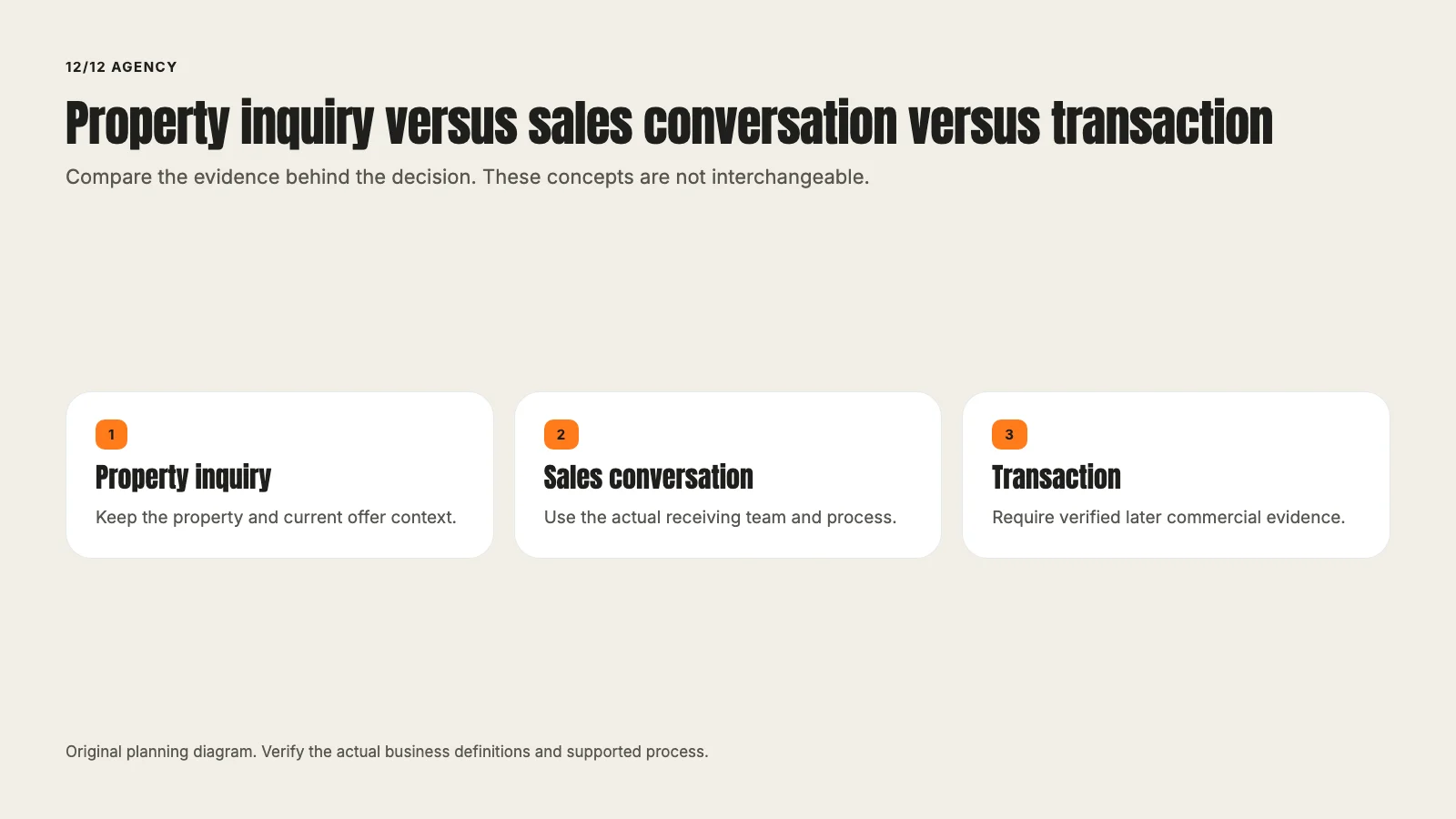
A property-detail view, an availability question and a qualified sales conversation are different events. Real-estate lead generation becomes difficult to assess when the marketing report treats all of them as the same result.
Start with the property context and the next action the receiving team can fulfill. Then review the actual offer, advertising plan, page and inquiry record together. This guide is an operating framework, not legal, investment or property advice.
Separate the inquiry journeys
A broker promoting a property, a developer handling new-construction inquiries and a commercial leasing team need different information. One generic form may leave the receiving team unable to tell what the person wants.
The real-estate overview can explain the broad marketing engagement. The new-construction, broker and commercial property pages should retain distinct commercial contexts.
Define the intended action for each journey. Requesting information, scheduling a viewing and submitting an application have different implications. A button should not promise a confirmed appointment if it merely sends a message to the team.
Verify the facts before acquiring traffic
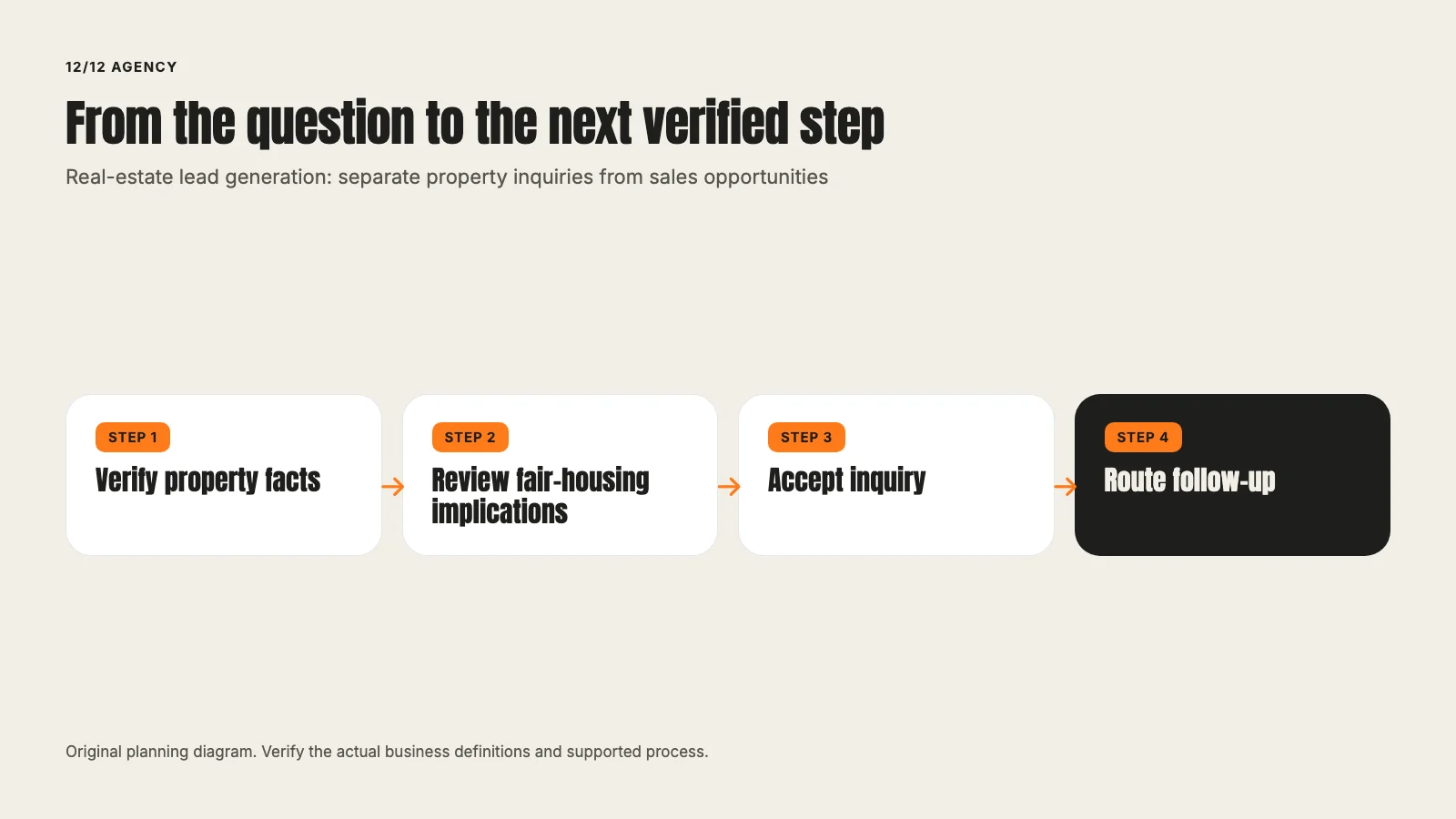
Confirm the property's current availability, location information, features and approved pricing or terms. A changed listing can make an otherwise accurate campaign misleading. Identify who is responsible for keeping the source current.
Use images and renderings with truthful context. A conceptual rendering should not be presented as a photograph of completed work. A representative unit should not imply that every available unit has the same layout or finish. The responsible property team should approve what the visitor will reasonably infer.
Do not invent inventory synchronization, feed integration or automatic CRM updates. If the marketing plan depends on a current source, verify that source and its actual update behavior before making a promise about availability.
Include fair-housing and platform review in the brief
Housing-related advertising requires a qualified review of the offer, copy, audience, delivery and data use. Do not reduce that review to removing a few demographic fields from a form.
HUD's digital-advertising guidance is a primary historical reference on risks in housing-ad targeting and delivery. The qualified reviewer must also assess current applicable law and policy for the exact campaign. An archived guidance document is not a substitute for that current determination.
Google's current personalized-advertising restrictions are another relevant platform reference. Do not reuse a targeting plan from an unrelated industry or infer that every available audience setting is permissible for the property offer.
This framework does not recommend protected-characteristic targeting, exclusion or steering. The concrete campaign should be reviewed before launch, with the responsible people and evidence identified.
Design the destination for a real decision
A useful page should answer what the property is, what information is verified and what the next step means. Keep the main inquiry route visible without hiding essential terms or context.
For a fictional commercial listing, the page might explain the supported use category, available information and how the leasing team reviews a request. It should not approve a prospective use, zoning question or financial suitability through marketing copy.
For a fictional residential development, the page might explain the current stage and the process for requesting approved information. It should not promise an investment return, financing eligibility or delivery date without the appropriate verified basis.
Ask only what supports the initial handoff
Identify the fields the team actually needs to route and prepare a response. Property of interest, general timing and preferred supported contact method may be useful. The exact collection and handling require the business's approved process.
Avoid using unnecessary personal or sensitive information as a proxy for fit. Qualification should follow legitimate, reviewed criteria. A longer form is not automatically a better or more appropriate filter.
Inspect mobile completion, required-field errors and the confirmation state. A person should understand whether their request was received and what happens next. The data should reach the right team with the relevant property context intact.
Verify the record without creating false business activity
Map the accepted request, source information, notification and receiving record. The conversion-tracking guide explains why a technical tag request is narrower evidence than an accepted inquiry or attributed sale.
Use an approved labeled test if necessary. Agree on any messages, viewing slots or CRM consequences first. Do not create extra appointments or submit applications merely to populate a marketing report. Preserve the test identity and exclude it from business counts.
If an integration automatically creates a deal, its value is not real pipeline simply because the system assigned an amount. Record it as QA and keep it out of revenue and opportunity reporting.
Define later stages with the sales team
A useful outcome ladder might distinguish accepted property inquiry, contacted prospect, viewing booked, viewing held, application and verified transaction. The actual stages depend on the business.
Do not count one person at several stages as several customers. Preserve stage times and the property or opportunity identity. A recorded asking price, application amount or contract value is not automatically collected revenue.
Separate missing evidence from negative outcomes. If the team has not recorded whether a viewing happened, unknown is more accurate than no-show. A report should make the follow-up task visible rather than invent a completion.
Compare sources using a fair window
Use one entry period and a consistent opportunity for outcomes to occur. Compare relevant property context, availability and market conditions. A source reaching an unavailable unit cannot be judged like a current listing campaign without that qualification.
Include media, management and relevant production costs in the chosen boundary. Avoid summing values that more than one platform attributes to the same transaction. Attribution is a system's allocation rule, not proof that the campaign caused the sale.
For an illustrative worksheet, a fictional $3,000 plan might produce 30 accepted inquiries and six held viewings. The included cost per inquiry is $100 and per held viewing is $500. Those invented figures demonstrate arithmetic only. They do not predict transactions or property returns.
Choose the next controlled change
The evidence may call for an availability correction, clearer property context, a handoff repair or a bounded acquisition test. Record the observation, proposed change and acceptance check. The paid media overview supplies the broader engagement context, not automatic authority to change targeting or spend.
A useful review package contains the exact property offer, destination, audience plan, form, permitted data flow and outcome definitions. Qualified reviewers can assess that concrete package more effectively than a vague request to approve lead generation.
Keep a property change log with the campaign
Record the approved availability source, material listing changes and the date each public destination was checked. A changed unit, property status or offer can affect both customer expectations and performance comparisons.
If the campaign sends people to an outdated destination, the first job is a factual repair. Do not interpret the resulting request quality as a clean test of the channel. Preserve the actual period and explain which records may have encountered the old information.
This log should be simple enough that the property and marketing teams maintain it. It can identify the source, responsible person, exact proposed correction and public readback without collecting prospective buyers' private details. The goal is a reliable connection between the offer and the inquiry, not another dashboard detached from availability.
Bring the property context and inquiry process to a planning review.
Frequently asked questions
Want this run for your business?
Tell us where to send it and we'll follow up with the strategies that fit your market.