
Restoration SEO separates urgent needs from research
David A · Founder, 1212 Agency
Published November 16, 2026

Map restoration searches to accurate service pages, real coverage and a dependable intake path. Keep urgent requests separate from educational research.
A person seeking help after property damage needs a different page from someone researching a process for later. Restoration SEO should make that distinction clear without promising response availability, technical outcomes or insurance coverage the business cannot verify.
The website's first responsibility is accurate service information and a dependable next step. Search work supports that job. This guide addresses marketing architecture and intake, not remediation, health, engineering or insurance advice.
Map urgency and supported service
List the restoration services the company actually offers and the conditions under which it can respond. Water, fire, mold-related and general reconstruction inquiries may have different requirements and responsible teams. Do not imply that one marketing page establishes expertise in all of them.
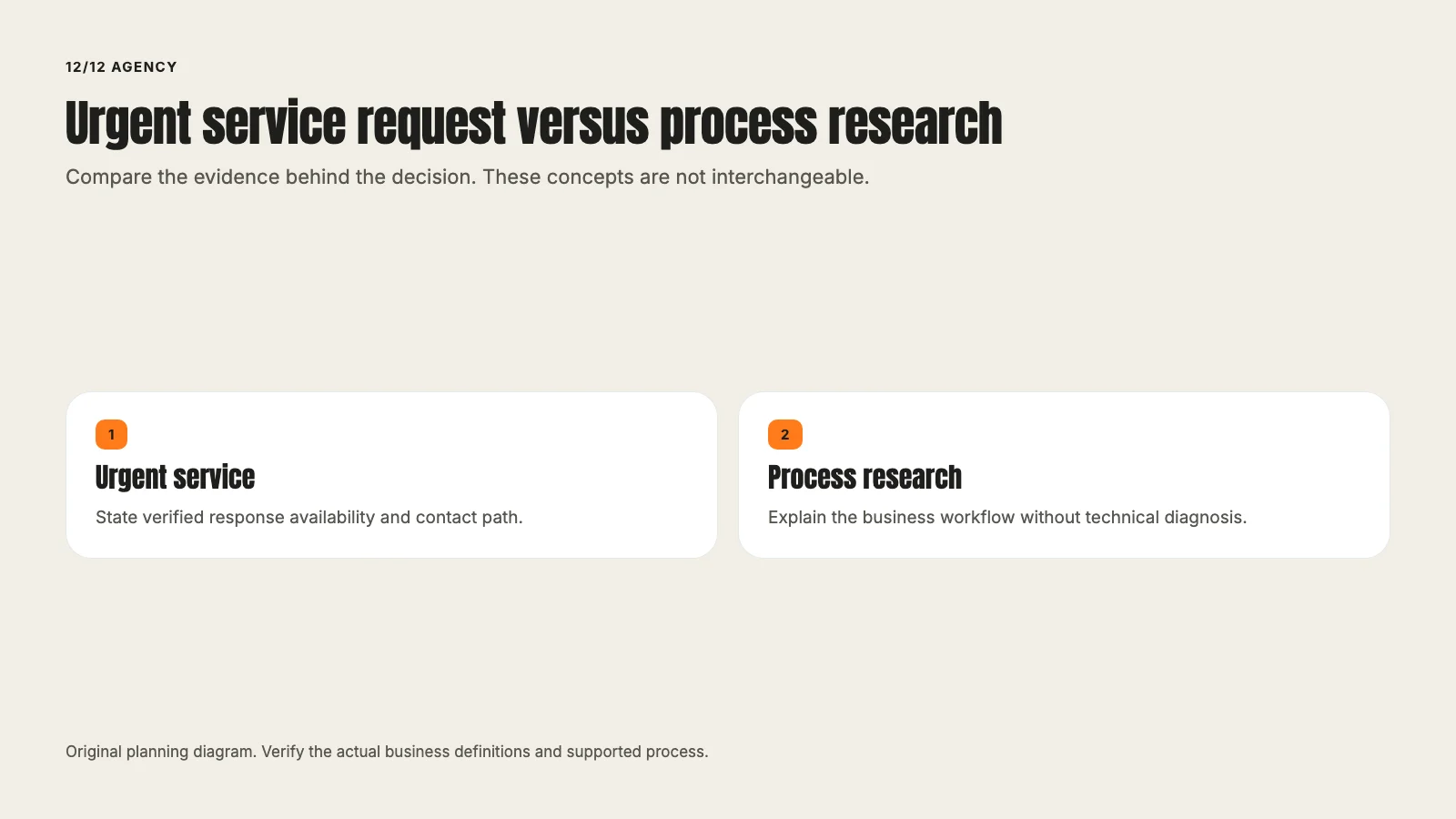
Distinguish urgent service searches from educational questions. A commercial service page should explain fit, coverage and the real contact path. A guide can explain how the business's intake process works or which non-sensitive information helps the first conversation.
The existing restoration service page remains the broad commercial explanation. New educational content should answer a distinct question rather than compete with that page for general restoration marketing intent.
Describe response availability honestly
Terms such as emergency and 24-hour create expectations. Confirm the actual staffing and routing before using them. A form that is reviewed the next business day should not imply an immediate dispatch.
Explain whether the first contact is a request, a callback or a confirmed visit. If the business gives separate emergency instructions, the responsible professional must approve them. Marketing copy should not improvise safety directions for a person facing a hazardous situation.
Check the contact path on the devices people use. A phone link, visible number and form can fail in different ways. The successful empty-page screenshot is not a complete test of the handoff.
Use service evidence instead of repeated city pages
A useful service page explains the supported scope, process, qualifications and limitations. Approved project evidence can add context, but it must not imply a guaranteed result or reveal a customer's private property details.
Real service coverage can be explained in one clear place. Separate area pages need meaningful local information and evidence. Swapping the city name in identical paragraphs does not help someone decide whether the team can reach and serve them.
Google's business representation rules require accurate public information. Do not create virtual branches or imply local staffing that does not exist.
Keep technical and insurance claims with qualified reviewers
A marketer should not infer that an image proves a property is safe, a material is harmless or an insurance claim will be paid. Those statements have different evidentiary and professional requirements.
Ask the appropriate expert to verify service descriptions and process statements. Record where a claim comes from and what would make it outdated. A general disclaimer does not repair an inaccurate or exaggerated headline.
An educational article can explain what happens after a request, what the business reviews and which specialist handles the next question. That is useful without diagnosing damage or advising the reader on coverage.
Structure the website for the next decision
Map each search family to one useful page. A service page might lead to a process explanation or an approved preparation resource. Internal links should help the reader continue, not force every page to mention every service and town.
Check that important content is available, links work and public pages have appropriate metadata and indexing controls. Google technical eligibility does not guarantee indexing or rankings. Search Console, when available, can provide different evidence from a public HTML crawl.
Use original diagrams where they clarify the intake or handoff. Do not use a generic emergency image to imply a real project or current response capacity.
Measure the request the business actually received
Separate a call-button click, connected inquiry, accepted service request, scheduled visit and later business outcome. They may occur in different systems and at different times.
Use a defined cohort and exclusion reasons such as outside area or unsupported service. A high-volume month can include unsuitable inquiries. A low cost per form is not proof of useful work.
Review source persistence and routing with the responsible team. If a test creates a real notification, agree on it in advance and label it. Do not send repeated test requests to an emergency intake process merely because reporting is delayed.
A useful first work sequence
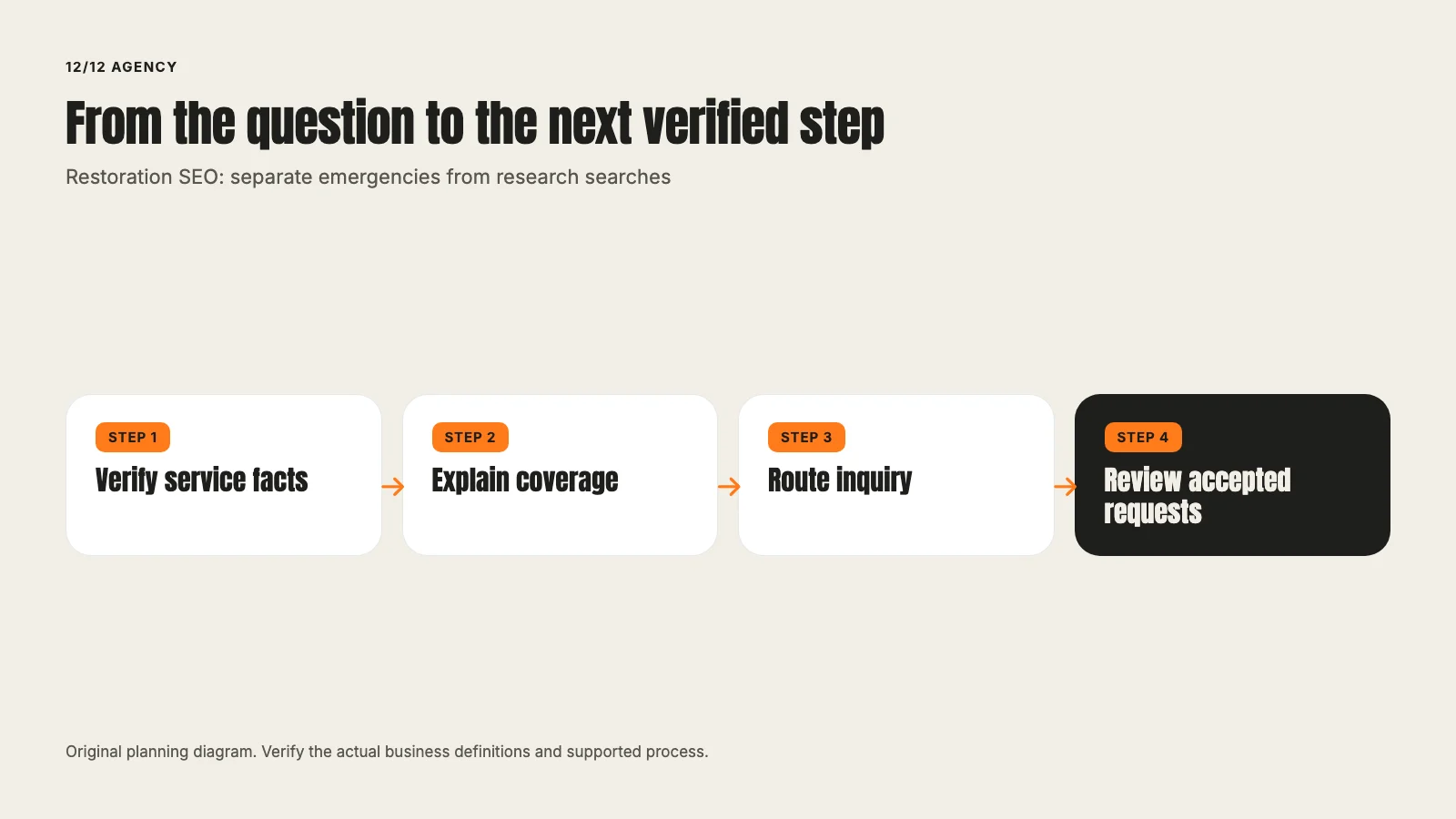
Verify the service and coverage facts, improve the most important existing service page, test its contact path and review the questions actual suitable customers still ask. Then create the distinct educational answers supported by expert evidence.
Bring the current service page and intake process to a review.
Build an intake page card with the responsible team
Record the supported service, actual response coverage, contact route and what confirms the next step. Ask operations to verify the exact availability claim. Ask the appropriate expert to review technical wording. Ask the receiving team to explain what happens if the usual route is unavailable.
The home-services overview can connect this work to the broader acquisition plan. If paid distribution is considered, the Google Ads and Meta contexts should preserve the same accurate service boundaries. A campaign should not promise a faster response than the website and team can support.
Use Google's representation guidance for accurate public business identity and its technical requirements for the page's search eligibility. Those sources do not establish that a restoration process is safe, effective or covered by insurance. The qualified business sources govern those claims.
Make the evidence chain usable under pressure
The tracking guide distinguishes a page interaction from an accepted request and later business record. For a time-sensitive service, the review should also identify who receives the notification and what fallback is actually available. A technical success message is not proof that a person responded.
Use a small number of operational states that the team can maintain. Received, routed, contacted and next step confirmed can answer more useful questions than a vague lead-quality score. Preserve unknown where a record is incomplete.
An illustrative review might find that service-area information is accurate but the form does not carry the selected service to the intake team. That needs a field-mapping repair, not a new emergency headline. Another review might find that research articles send visitors directly to an urgent-service route without explaining the distinction. That needs a clearer content path.
Write the observation and proposed correction separately. Verify any released change against the actual request journey and keep labeled tests out of business counts. If testing would contact an emergency team or create a real dispatch request, obtain approval for that exact consequence first. The goal is a dependable marketing handoff, not a demonstration that creates unnecessary operational activity.
Review the research-to-service transition
An educational visitor may need to understand the intake process before requesting help. Make the transition clear without treating the article as a substitute for qualified safety or remediation advice.
Link to the appropriate supported service and explain what the contact action does. If the business reviews the request before confirming availability, preserve that wording. A general article should not imply that a team is already dispatched.
Have the responsible reviewer check the transition as well as the technical paragraph. The largest misleading implication can sit in a button or caption rather than the main article text, so the final review needs the whole page context.
Frequently asked questions
Want this run for your business?
Tell us where to send it and we'll follow up with the strategies that fit your market.