
Medical-practice marketing starts with the appointment path
David A · Founder, 1212 Agency
Published November 16, 2026

Plan medical-practice marketing around accurate service information and an appropriate appointment handoff. Keep privacy review and measurement evidence explicit.
A practice can make its services easier to understand without sending patient details into advertising tools. The marketing plan should begin with accurate public information, appointment capacity and a carefully reviewed handoff to the appropriate system.
The key question is what a prospective patient needs to know before contacting the practice, and which information belongs in a protected clinical or scheduling process. Those decisions need the practice's operational, privacy and legal reviewers. This guide supplies a marketing workflow, not medical advice or a compliance certification.
Define the service and the supported next action
Ask the practice to verify its current services, locations, provider information, appointment process and public claims. A service page should not imply that a treatment is suitable for a particular person. The clinical team handles that assessment.
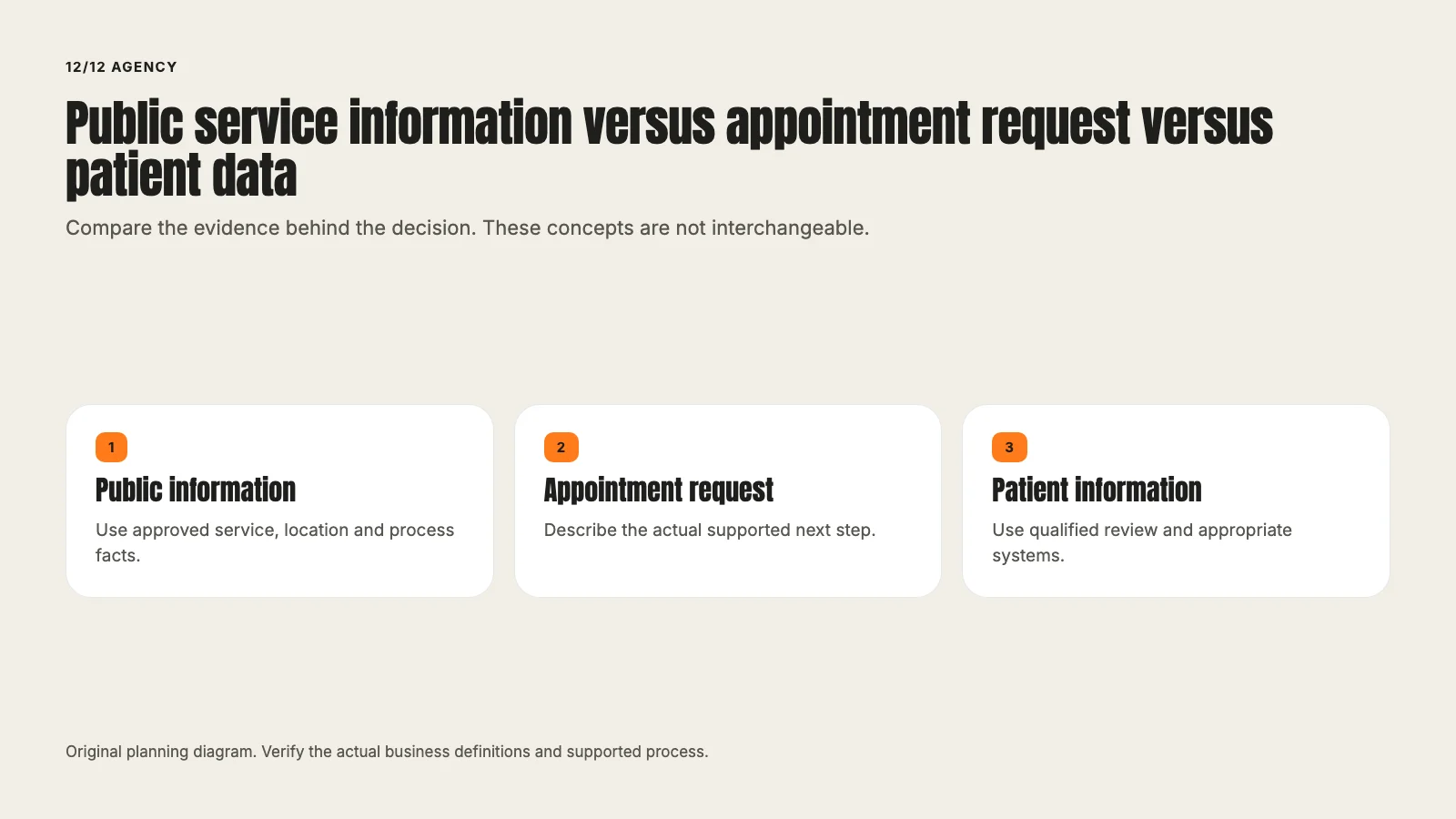
Distinguish an appointment request from a confirmed booking. Some practices review requests before offering a time; others use a supported scheduling system. The button and confirmation should describe the process the person will actually experience.
The healthcare overview can explain the marketing engagement. The primary-care and wellness pages should retain their own service contexts. Do not create another nearly identical commercial page for every broad healthcare phrase.
Separate public explanation from patient intake
A public page can explain hours, location, the general appointment process and the service categories the practice approves. A clinical intake process may require different systems, permissions and safeguards.
Do not add symptom, diagnosis, medication or other patient fields to a marketing form merely because they might help segmentation. Ask the responsible team what information is appropriate at that point and where it may be processed. The same review applies to URLs, event names, page titles and analytics payloads that could disclose more context than intended.
A generic cookie banner is not a complete answer to those questions. The practice needs a review of actual data flows, vendors and applicable requirements, not a label saying privacy-friendly.
Review the actual tracking plan
The current HHS tracking guidance addresses how regulated entities should evaluate online tracking and also describes the legal context affecting its scope. Do not reduce that nuanced guidance to a blanket claim that every public visit is protected health information or that no public visit can raise an issue.
Have qualified reviewers inspect the actual configuration and data before implementation. Identify which pages contain authenticated access, which actions can reveal patient context and which vendors receive information. Keep credentials and real patient records out of the marketing review package.
The conversion-tracking guide explains general accepted-action distinctions, but healthcare handling requires this additional domain-specific review. A general tag tutorial does not certify a practice's setup.
Choose an audience and message the policy allows
Marketing should explain the approved service accurately and avoid implying knowledge of a person's condition. Google's current health-related personalized-advertising policy is one relevant primary reference when planning Google campaigns.
The actual policy and legal review depends on the offer, audience, market and platform. Do not reuse a consumer retargeting plan from an unrelated industry. Do not upload patient lists or infer sensitive interests because a campaign interface makes an audience feature visible.
A useful campaign brief names the service, general buyer question, approved claim, destination and intended action. The responsible reviewers then evaluate that concrete plan. They should not be asked to approve a vague instruction to generate more patients by any available method.
Build pages from verified practice information
Use accurate provider and location details, current access instructions and an understandable next step. A page can answer whether the practice offers a service without promising a clinical outcome.
Evidence must match the claim. A photograph of a room is not proof of a treatment result. Testimonials, professional credentials and outcome statements need their own approved basis. Do not invent patient stories or before-and-after results.
Keep mobile readability and accessibility part of the review. People should be able to understand the information and operate the supported contact controls. A sticky booking button should not obscure privacy choices or essential instructions.
Match acquisition to actual appointment capacity
Ask operations which appointment types are currently available and how requests are reviewed. A campaign that increases demand for a service with no capacity can create frustration and unnecessary administrative work.
Separate a capacity problem from a message problem. If the practice is not accepting a particular appointment type, the page should be accurate before additional traffic is sent. If the contact route fails, repair it with a defined acceptance check.
The paid media overview provides the broader planning context. It does not override clinical, privacy or operational responsibilities. Budget and targeting changes still require the appropriate approval.
Verify a bounded path safely
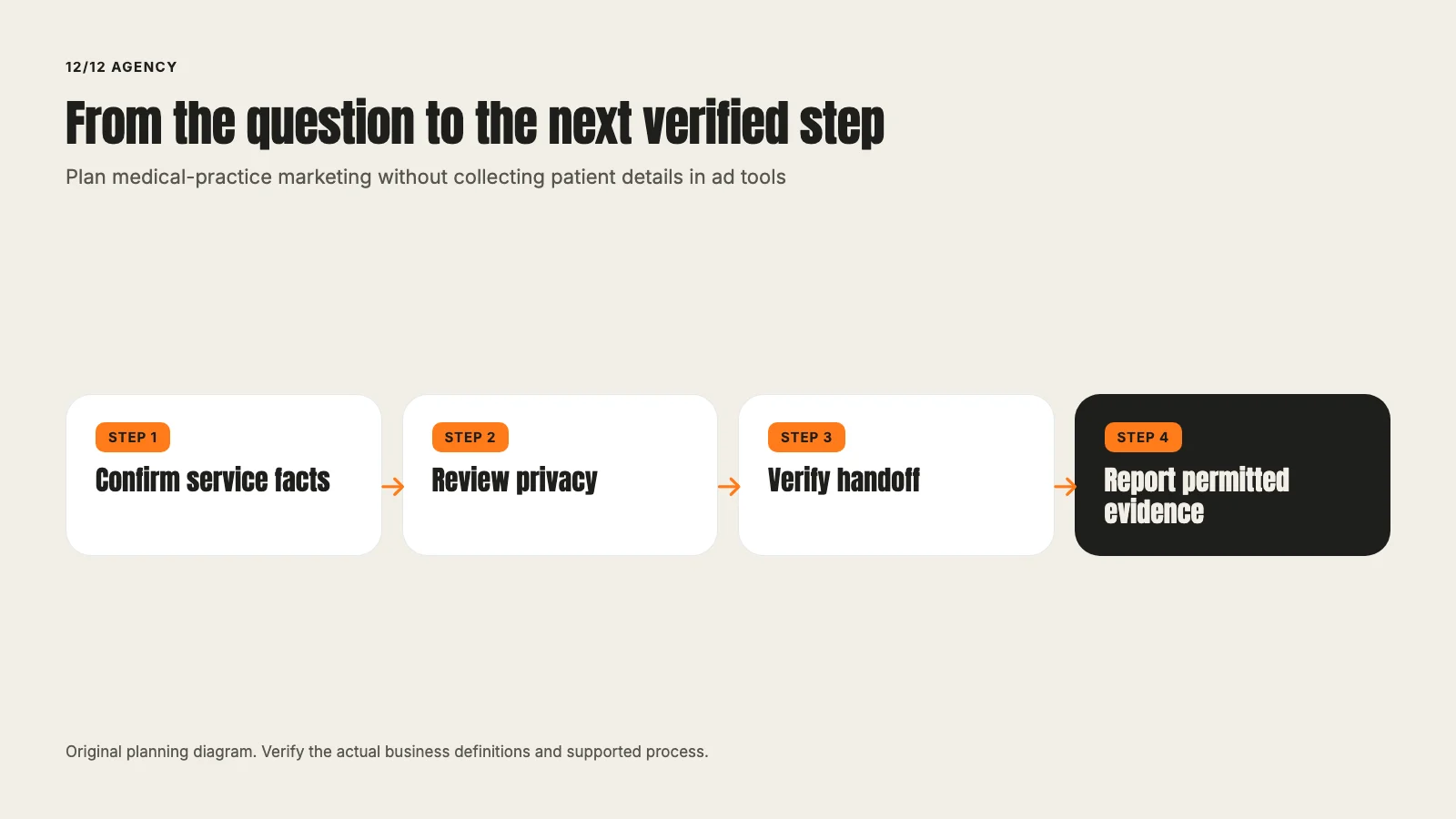
Use a qualified-approved test plan that avoids real patient information and unnecessary notifications. Define the test identity, permitted fields, systems to inspect and consequences before the action. A test should not create a real clinical appointment unless that specific consequence is authorized.
Verify the narrow evidence available: page behavior, accepted request, appropriate handoff and permitted technical receipt. Do not force a tracking permission state to make the test pass. Do not record protected screens or real inboxes as a marketing demonstration.
Preserve the labeled test and agree how it is excluded from business reporting. Deleting records or canceling appointments is a separate action and should not happen silently.
Report what the evidence can support
A public page visit, phone interaction, appointment request, confirmed appointment and attended visit are different measures. Define each one and its permitted source. Do not combine them into one patient count.
Use aggregated evidence where appropriate and approved. A marketing report does not need a screenshot of a patient name to show that the workflow was reviewed. If a system cannot safely provide a particular attribution measure, state the limit rather than inventing a substitute.
Compare periods with operational context. Changed hours, provider availability, service scope and appointment capacity can affect results. A traffic trend alone does not establish the effect of a campaign or a patient's clinical outcome.
A practical first sequence
Confirm the service facts, map the appointment process, obtain the specific privacy and policy review, improve the public explanation and verify the permitted handoff. Then choose a bounded acquisition test that the practice can support.
Bring the service facts and appointment process to a planning conversation. Start with a path the practice can explain and support.
Prepare the qualified review as a concrete packet
Give the practice reviewers the exact service statement, form fields, proposed audience, destination, event labels and vendor data flow. Ask them to identify what is permitted, what must change and which evidence supports the conclusion.
A broad instruction to make tracking compliant is not an implementation specification. The useful result names the actual page or event, information at issue, responsible reviewer and acceptance check. It should distinguish a public-information correction from a change involving patient context or authenticated access.
The copy can be complete while that specialist decision remains open. Label the dependency precisely and keep the draft out of publication until the required review is resolved. Do not fill a missing clinical or privacy conclusion with a generic disclaimer or a promise that hashing makes the data harmless. The practice's actual systems and qualified assessment govern the implementation.
Frequently asked questions
Want this run for your business?
Tell us where to send it and we'll follow up with the strategies that fit your market.