
Insurance lead generation needs a permission record
David A · Founder, 1212 Agency
Published November 16, 2026

Evaluate insurance inquiries by source, contact permission, product fit and verified outcomes. Keep lead delivery, sales qualification and policy results separate.
An insurance lead is not useful merely because it contains a phone number. The business needs to know where the inquiry came from, what the person requested, whether the intended contact is appropriate and which licensed team can assess product fit.
Lead generation should preserve that evidence from the first promise through the later policy process. This guide explains an operational review, not legal advice, product advice or a recommendation to buy a particular lead service.
Define the product and the responsible business
Start with the actual insurance product, market and licensed entity. Different products, jurisdictions and contact methods can carry different requirements. A generic lead funnel should not erase those distinctions.
Ask the responsible team to approve the service description and the next action. A request to discuss options is not an eligibility decision, a quote or a policy. The public page should use the narrower label the process supports.
The insurance service page can retain the commercial marketing explanation. The final-expense page needs its own approved product context. This educational guide does not create another broad agency page or a marketplace for personal data.
Record what the person actually requested
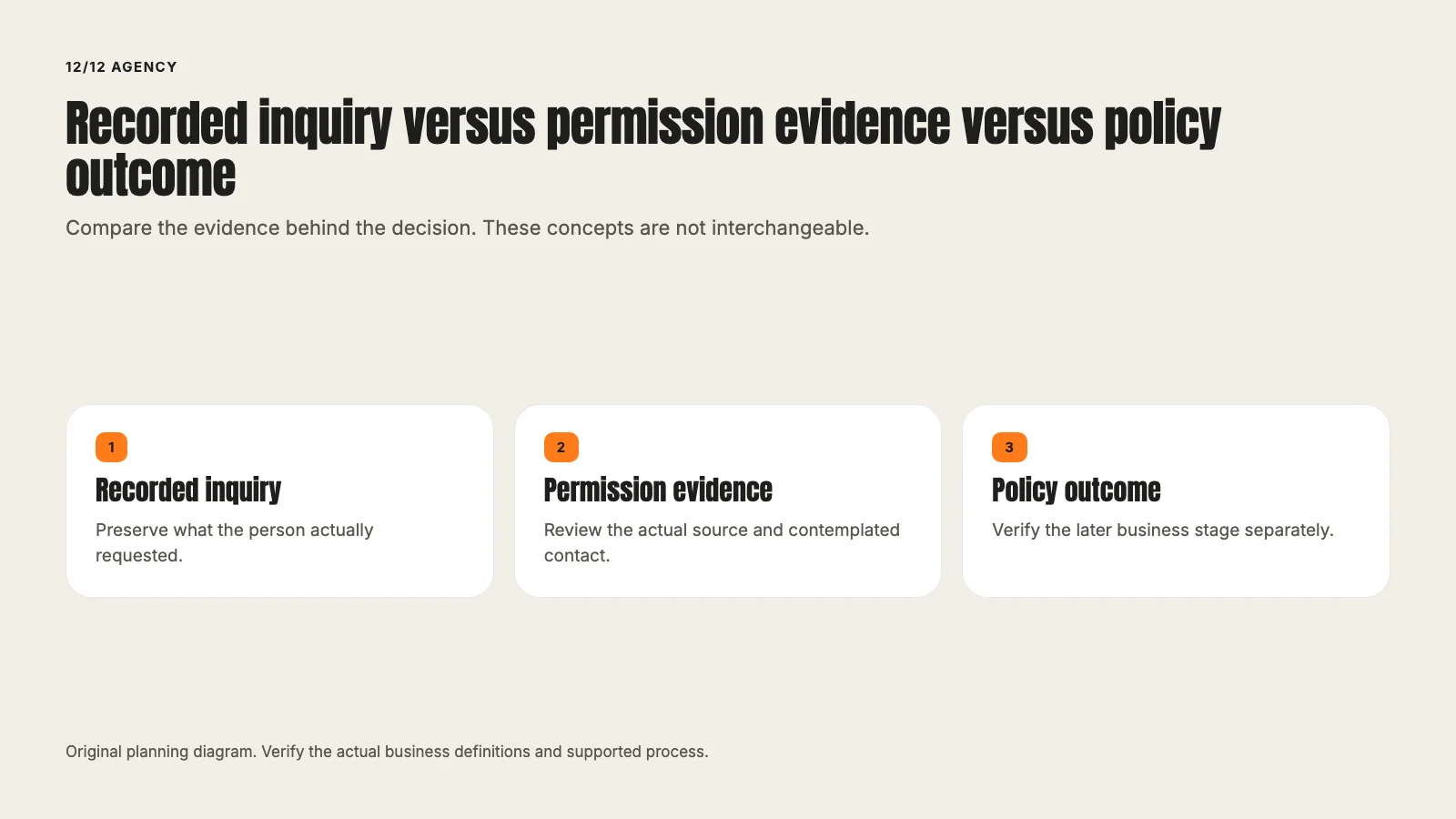
The source record should preserve the offer, relevant form version, permission evidence and timestamp in the approved system. Ask which business the person expected to hear from and what contact method the reviewed process supports.
Do not infer broad permission from the existence of an email address or a completed form with an unrelated offer. Do not silently relabel a resource download as a request for a sales call. The exact wording and applicable rules require qualified review.
For third-party leads, verify the actual collection and transfer terms. A vendor's assertion that a lead is compliant is not the same as a reviewable record of the person's request. The receiving business needs an explicit due-diligence process before purchasing or using the data.
Review contact rules before automation
The FTC's Telemarketing Sales Rule guidance is one relevant source for a qualified review of covered calling practices. It should not be treated as the only rule that might apply to an insurance business or a particular communication method.
The team must evaluate the product, jurisdiction, channel, consent language, suppression and vendor responsibilities. Do not turn this general article into a universal script or a claim that one checkbox authorizes every later contact.
Marketing automation should follow the approved contract. It should not create permission, remove suppression or switch the named contacting business merely because an integration can move the record.
Separate fit from sensitive inference
Useful initial routing can include the product requested, general location and the business's approved eligibility information. The qualified sales process determines which additional details are necessary and appropriate.
Do not collect sensitive personal information in a public marketing tool merely to make a lead score look more sophisticated. Do not infer vulnerability, health conditions or financial hardship from browsing behavior.
Google's current personalized-advertising restrictions are relevant when planning affected campaigns. The exact offer and targeting plan need policy review. A feature being available in an interface does not establish that its use is appropriate for the business.
Verify the handoff without exposing personal records
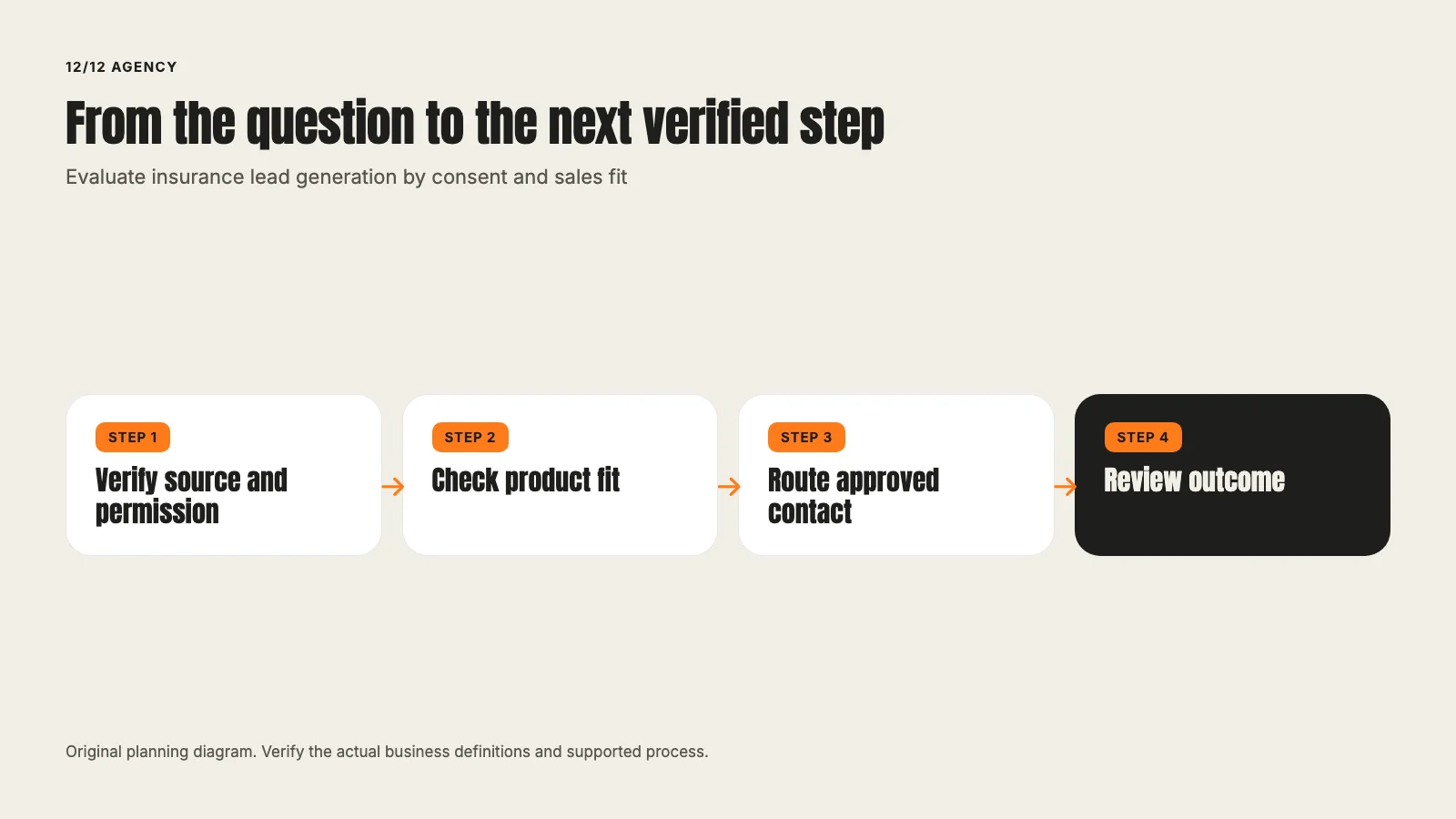
Map the accepted inquiry, receiving system, responsible role, operating coverage and fallback. Confirm what the sales team receives and which evidence it needs before contact.
The conversion-tracking guide explains the general difference between technical events and business records. Insurance-specific data handling must be reviewed separately. Do not send personal details into URLs, public screenshots or unreviewed advertising events.
Use an approved fictional or labeled test identity if a real submission is necessary. Agree on any notifications or follow-up consequences beforehand. A test record should remain identifiable and excluded from business counts rather than being silently deleted afterward.
Define the outcome ladder
A practical report can distinguish delivered lead, accepted inquiry, appropriate permission evidence, contactable prospect, sales-reviewed fit, application and verified policy outcome. The exact stages belong to the business's actual process.
A lead can be rejected for different reasons: duplicate, unsupported product, outside market, missing permission evidence or unable to reach. Those reasons should not be combined into one generic low-quality label.
Do not count every stage as a separate customer. An application is not automatically an issued policy, and a quoted premium is not collected revenue. Keep cancellation or retention measures distinct if they are later reviewed under an approved process.
Compare costs through the same window
Use the same product context, entry period and observation window when comparing sources. Include relevant media, vendor, management and handling costs without double counting.
For a purely fictional example, source A costs $2,000 and provides 40 accepted inquiries, while source B costs $3,000 and provides 30. Early-stage cost is $50 and $100. If verified outcomes later differ, that initial comparison can change materially.
Do not invent later outcome rates to declare a winner. If the records are incomplete, say what evidence is missing and what review will resolve it. Sparse or immature cohorts should not support a permanent source verdict.
Keep the public promise narrower than the sales decision
A page can explain who the business serves, what a conversation covers and how a request is handled. It should not promise approval, savings, coverage or a particular product outcome without the appropriate verified basis and qualified review.
The paid media overview and landing acquisition context can support the broader marketing discussion. They do not replace licensed product judgment or authorize a new audience, spend or contact program.
Review actual claims, forms and destinations together. A carefully worded ad can still lead to a page with a misleading promise or an unreviewed data flow.
A useful first review package
Prepare the exact offer, source path, form wording, permission record, receiving role, suppression rules, outcome definitions and cost boundary. Give the qualified reviewers that concrete package.
Then identify the next work item: clarify the offer, repair evidence capture, verify routing or prepare a bounded source test. A named dependency is actionable. A vague statement that compliance is handled is not.
Bring the product, source and permission questions to a planning review. Preserve the evidence before expanding acquisition.
Make the source review reproducible
An internal source card should identify the offer shown, collection route, relevant permission evidence, named receiving business, approved contact method and suppression responsibility. Keep the evidence in the appropriate controlled system rather than copying personal details into a public planning file.
Ask the qualified reviewer what would make the record insufficient for the contemplated use. That can expose a concrete dependency before money is spent on a source or automation moves records. The answer should be specific to the actual arrangement, not an unsupported statement that all purchased leads are either safe or unusable.
When a source changes its form or delivery terms, review the new version before assuming the old approval applies. Preserve the version and date behind the decision. This makes the later acquisition analysis more meaningful because the team can see whether the source population and permission basis changed.
The marketing report should use aggregated stages and exclusion reasons. It does not need to expose a person's product interest or private circumstances to explain that a source needs more evidence. Privacy-conscious reporting and accurate commercial analysis can support the same operational decision.
Frequently asked questions
Want this run for your business?
Tell us where to send it and we'll follow up with the strategies that fit your market.